
Author: Alexandru Monahov, National bank of Moldova
Summary
This working paper introduces the DSTI Gap, a new risk monitoring tool designed to assess household ability to repay debt amidst inflationary pressures. Building on the Debt-Service-to-Income (DSTI) ratio, the DSTI Gap measures the excess financial resources borrowers have after covering expenses and debt payments – essentially their buffer against shocks.
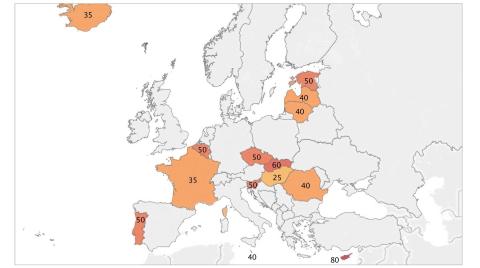
Analyzing the data for 15 European economies which adopted the DSTI ratio, the research develops an instrument which can be used to dynamically track the distance-to-default of borrowers under different types of shocks: inflationary, revenue and policy changes.
Furthermore, coupled with reverse stress testing, the DSTI Gap can determine the maximum inflationary shock a borrower can withstand before defaulting.
Analysis of the situation in Moldova reveals that a 40% DSTI threshold provides adequate protection against moderate inflation, but higher or sustained price increases may necessitate adjustments to this limit for borrowers to remain solvent.
Key findings highlight:
- The DSTI Gap offers a quantitative framework for regulators to calibrate appropriate DSTI thresholds based on actual living standards and income levels.
- It allows for proactive assessment of the sustainability of existing or proposed DSTI limits in changing macroeconomic conditions, particularly regarding inflation.
- By linking regulatory caps to essential consumption costs, the DSTI Gap moves beyond a simple percentage-based approach towards a more calibrated and borrower-centric model.
This tool provides valuable insight for financial stability monitoring and policy calibration, helping ensure borrowers remain solvent during periods of economic volatility.