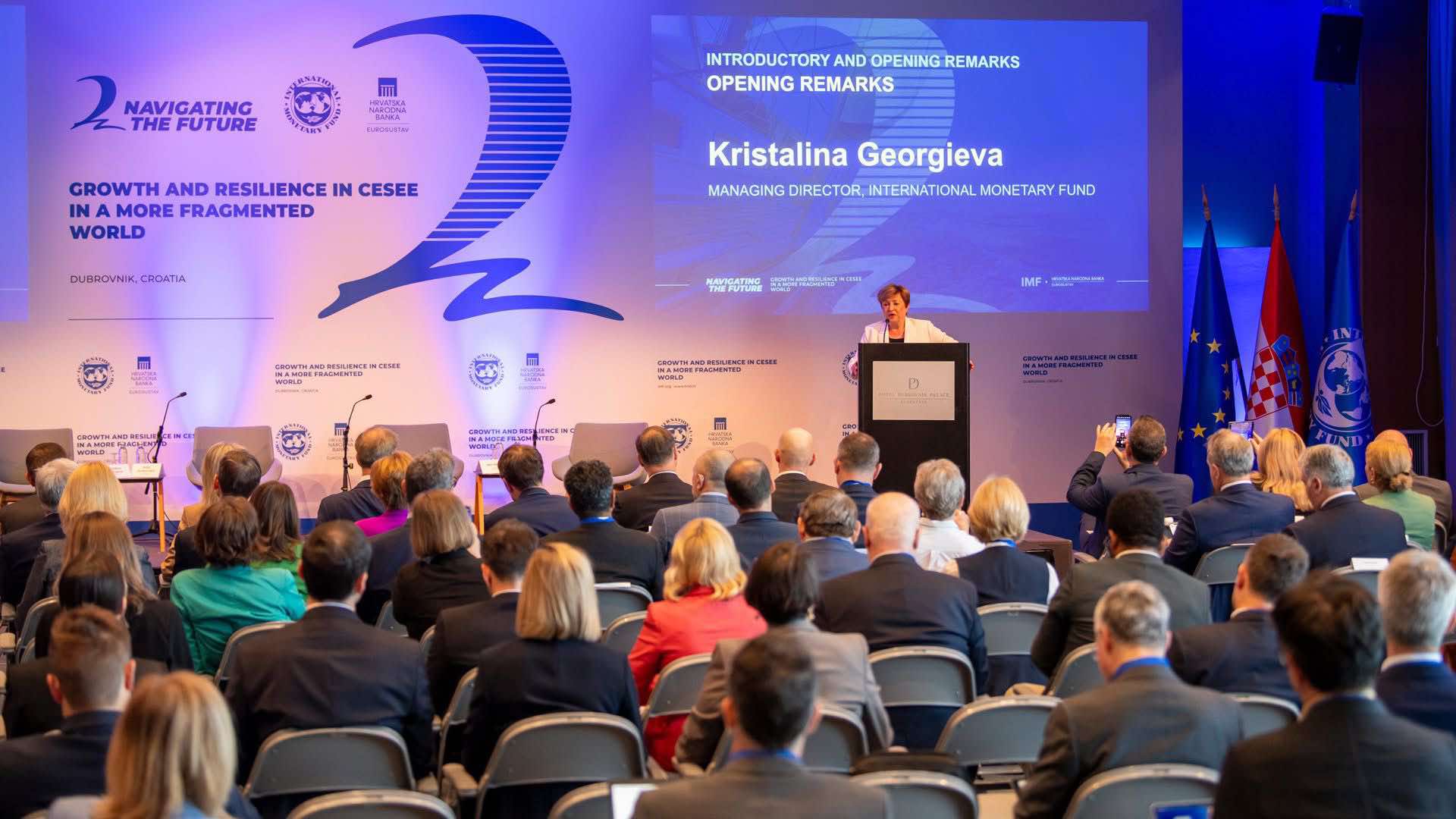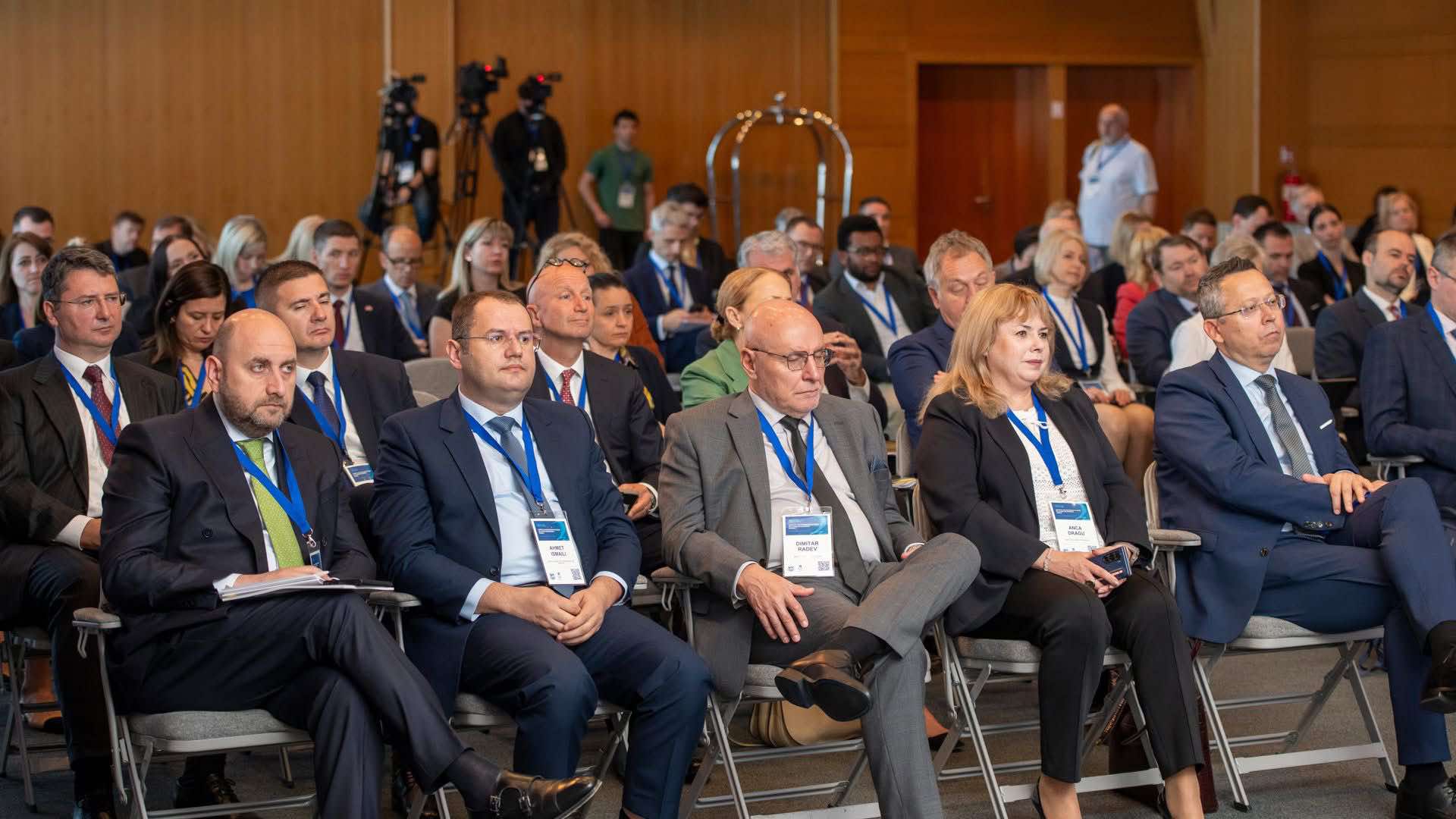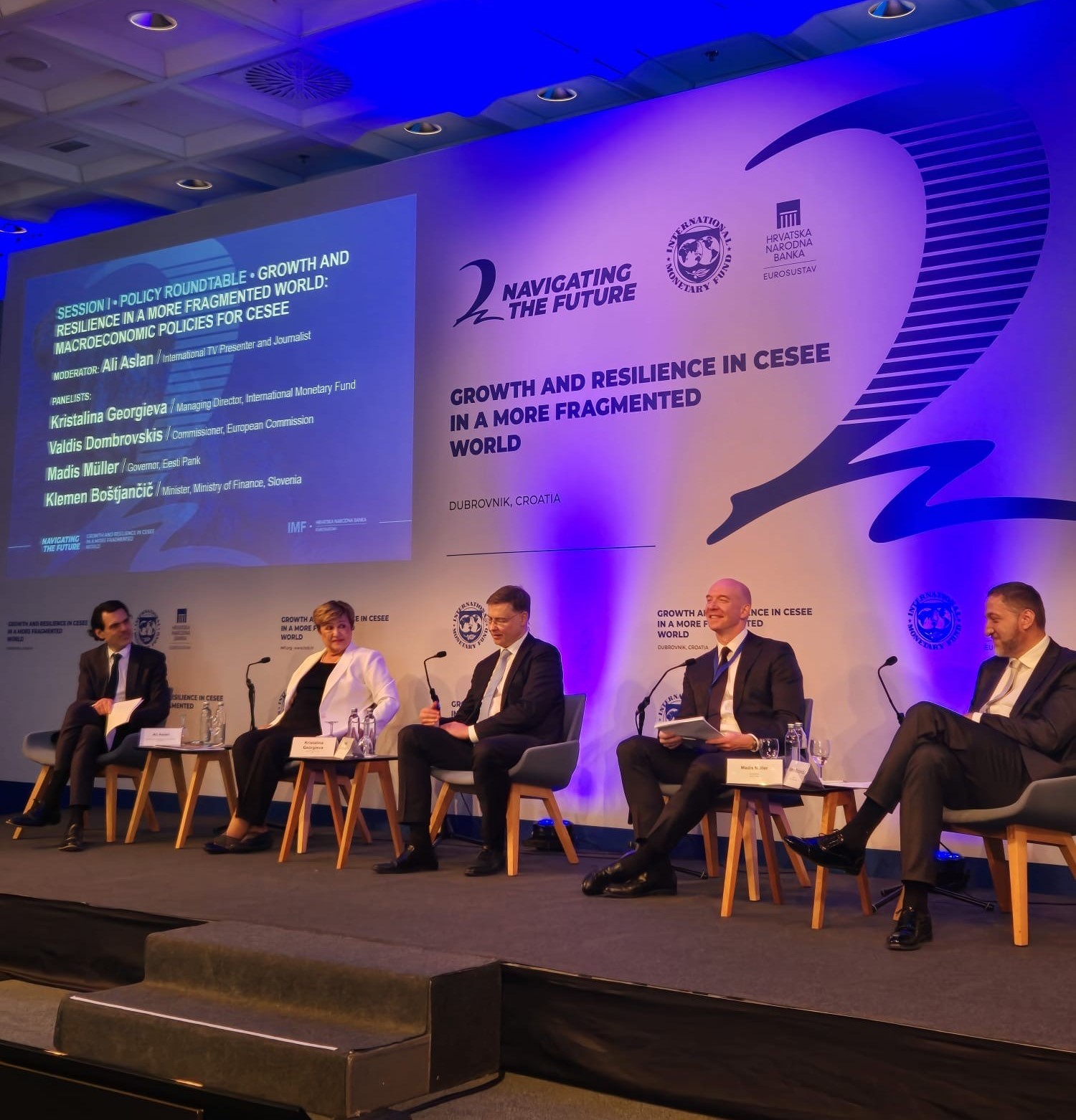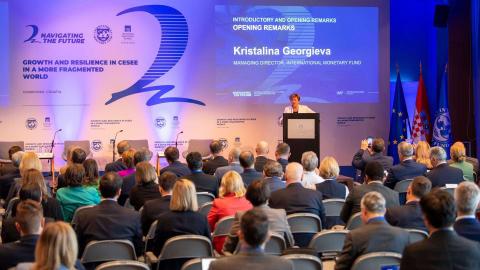
The Governor of the National Bank of Moldova, Anca Dragu, participated in the high-level international conference "Growth and Resilience in Central and South-Eastern Europe in an Increasingly Fragmented World", organised by the International Monetary Fund (IMF) and the Croatian National Bank, held in Dubrovnik from 29 to 30 May 2025.
The event brought together high-level decision-makers, including Kristalina Georgieva, Managing Director of the IMF, Valdis Dombrovskis, European Commissioner for Economy and Productivity, and for Implementation and Simplification, Alfred Kammer, Director of the IMF's European Department, as well as finance ministers, central bank governors, representatives of the World Bank and European academic community.
On the margins of the conference, Governor Anca Dragu participated in an informal roundtable dedicated to dialogue between the IMF leadership and the region’s monetary authorities, where she addressed the Republic of Moldova’s prospects in the context of current economic challenges and the EU accession process. The National Accession Program to the EU, recently approved by the Government in Chisinau, was positively received.
"The Republic of Moldova is fully committed to its European path, and the National Bank plays an active role in the reforms that support this journey: from modernising the payment infrastructure to strengthening the financial regulatory framework and harmonising monetary and financial policies with EU standards. The approval of the National Accession Program to the EU provides both strategic direction and the assurance of a clear path, with reforms that are monitored and calibrated in the interest of citizens. Moldova demonstrates that through reforms and international cooperation, it can become part of the regional solution", underlined Ms. Anca Dragu.
The Governor also mentioned the importance of the IMF-supported program in strengthening economic and financial policies and highlighted the contribution of the Resilience and Sustainability Facility (RSF) in accelerating green reforms and integrating sustainability principles in the financial sector.
The roundtable discussions focused on managing external shocks, adapting macroeconomic policies in a volatile global context, as well as the IMF's support to countries in transition through programs aimed at enhancing resilience and economic stability.
The event in Dubrovnik provided a constructive framework for open dialogue and the exchange of best practices between central banks and international institutions, focusing on solutions that can support sustainable growth, modernise economies and strengthen regional cooperation.