
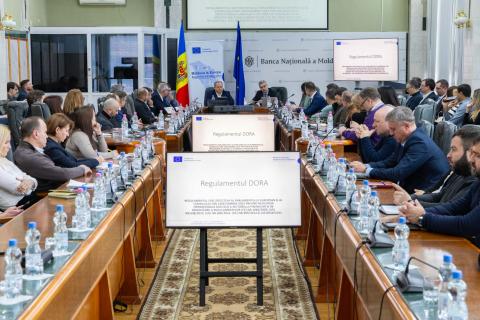
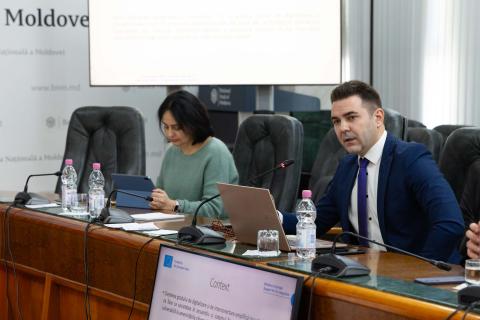
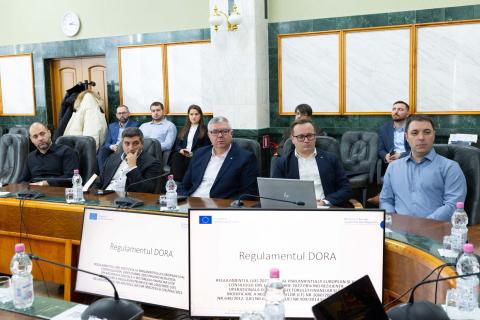


BThe National Bank of Moldova (NBM) organised a training session dedicated to the implementation of the Digital Operational Resilience Act (DORA), an initiative of the European Union aimed at providing a unified regulatory framework to protect the integrity of financial operations in the context of accelerated digitalisation
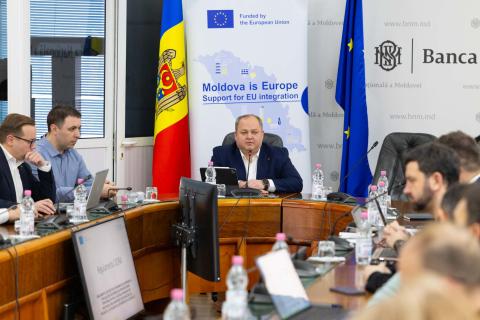
The event was held with the support of the EU-funded project “European Moldova – Support for EU Integration” and brought together representatives from financial sector institutions: banks, insurance companies, and payment service providers. The session aimed to support the alignment of the financial market in the Republic of Moldova with European standards and best practices.
The DORA Regulation establishes requirements for ICT risk management, incident reporting, digital resilience testing, and the supervision of technology service providers. Its purpose is to ensure that financial entities can effectively prevent, manage, and overcome technological disruptions.
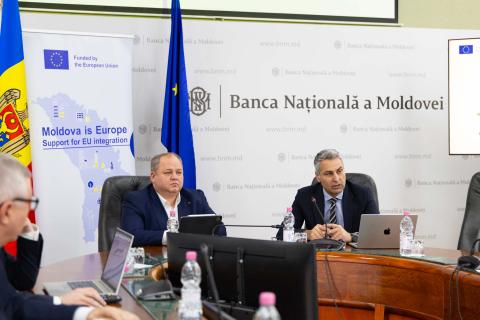
The training session was opened by NBM Deputy Governor, Mr. Constantin Șchendra, who emphasised that the transposition and uniform implementation of the European framework helps address challenges in the field of information technology, enhances trust in the financial system, and mitigates the effects of cyber incidents.
“The National Bank constantly monitors developments arising from the increasingly widespread use of digital technologies in the operations of financial entities. The growing degree of digitalisation in areas such as payments, electronic trading, or digital distribution of financial products necessitates the adoption of common and robust protective measures for digital systems,” highlighted the NBM Deputy Governor.
Mr. Nicolae Grigore, Senior EU Adviser on Financial Services, stressed the importance of implementing the DORA Regulation within the context of Moldova’s European path: “A harmonised framework with the EU will increase the attractiveness of the financial market for investors and facilitate cross-border operations of financial institutions, while simultaneously strengthening the capacity of the supervisory authority to identify and monitor emerging risks in an increasingly technology-dependent financial environment.”
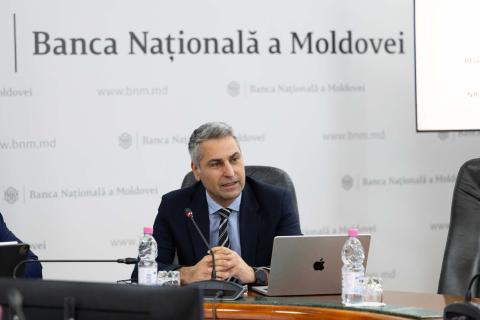
During the event, Mr. Tudor Doman, an EU expert involved in the technical assistance process for transposing the provisions into Republic of Moldova’s legislation, explained the main requirements of DORA, the five key pillars of the regulation, and the lessons learned by EU member states during the implementation process.
The training provided participants with a practical understanding of the DORA Regulation and the necessary tools for its implementation, contributing to the strengthening of the resilience of financial entities and the overall stability of the financial system.