Welcome to the official website of the National Bank of Moldova!
×
Do you have good eyesight and want to turn this tool off?



Welcome to the official website of the National Bank of Moldova!
You can choose one of the most popular reports from the list:

National Bank and the members of its decision-making bodies shall be independent in exercising the tasks conferred upon them by law, and shall neither seek nor take instructions from public authorities or from any other authority.
In order to ensure and maintain price stability over the medium term, the National Bank’s aim will be to keep inflation (measured by Consumer Price Index) at the level of 5.0 percent annually with a possible deviation of ± 1.5 percentage points, considered to be optimal for growth and development of Moldova's economy over the medium-term.

Financial stability is achieved by strengthening the resilience of the financial system, limiting the contagion effect and reducing the accumulation of systemic risks, thus contributing to the sustainability of the financial sector and economic growth.
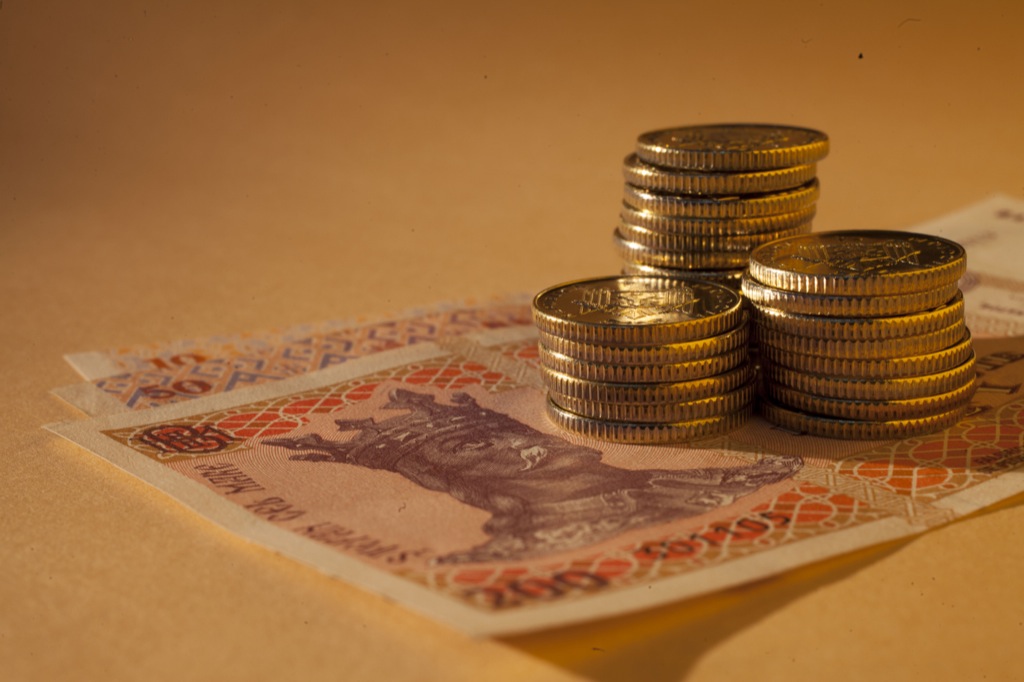
National Bank shall have the exclusive right to issue on the territory of the Republic of Moldova banknotes and coins as legal tender, as well as commemorative and jubilee banknotes and coins as legal tender and for numismatic purposes.

National Bank is exclusively responsible for the licencing, supervision and regulation of financial institutions activity.
National Bank of Moldova acts as banker and fiscal agent of the State and shall receive from state bodies economic and financial information and documents, which are necessary for carrying out its tasks.
National Bank of Moldova is an autonomous public legal entity and is responsible to the Parliament.

National Bank shall inform the public on the monetary policy strategy on the results of the macroeconomic analysis, the evolution of the financial market and on statistics, including with regard to monetary supply, crediting, balance of payments and the state of the foreign exchange market.

National Bank of Moldova is responsable for the compilation of the balance of payments, international investment position and the statistics of the external debt of the Republic of Moldova.
The National Bank of Moldova (NBM) announces that the Republic of Moldova has been accepted into the Single Euro Payments Area (SEPA). The decision reflects a confirmation of the significant progress made in the path towards accession to the European Union. SEPA membership will facilitate faster, safer and more accessible international payments in euro for Moldovan citizens and businesses.
On a working visit to Brussels, where the positive decision for Moldova was taken today, the Governor of the NBM, Anca Dragu, said: "The accession to SEPA represents a historic milestone and a clear demonstration of the Republic of Moldova’s commitment to aligning with the highest European financial standards. This achievement will provide Moldovan citizens and businesses with access to a faster, more secure, and cost-effective payment system. Additionally, it will significantly reduce the costs of money transfers from the diaspora - an essential factor for many families in Moldova. As a result, the country’s economy will become more attractive to foreign investors, more resilient, and more prosperous, ultimately enhancing the quality of life for all citizens. Today’s decision reaffirms Moldova’s irreversible path toward European integration.”
Video statement of the NBM Governor, Mrs. Anca Dragu
SEPA (Single Euro Payments Area) makes euro transfers simple and efficient, eliminating administrative barriers and significantly reducing the costs of international transactions. With this membership, Moldova becomes part of a modern financial system, facilitating its economic integration into the European area.
Moldova's accession to SEPA will make a real difference in the lives of families receiving money from the diaspora. More money will stay in Moldovans' pockets as high fees for international transfers will become history.
So, for Moldovans working in the EU and sending money home, SEPA means faster, cheaper and more efficient transfers. They will no longer have to pay excessive fees just to help their family. For example, today, an international transfer in euro for Moldovans costs between EUR 20 and EUR 200, but after SEPA, the same transfer could cost as little as EUR 1-2 or even 50 cents.
More than 60 percent of Moldova's exports go to the European Union, and joining SEPA will make it easier for companies to make commercial payments. With no extra fees and no delays, Moldovan firms will be able to make transactions in EUR at the same cost as in the EU, helping them to be more competitive on the international market.
Calculations show that with this accession, Moldova will immediately save around EUR 12 million annually and up to EUR 20 million in the medium term, money that stays in the national economy and supports business development.
The Republic of Moldova's accession to SEPA is not only an advantage for citizens and the local business environment, but also a strong signal for investors. Through this integration, Moldova demonstrates that it has a financial system compatible with the European payments infrastructure, thus increasing the confidence of international companies wishing to invest in the local market, while also creating jobs.
In addition to the economic and investment benefits, joining SEPA marks an important milestone in the digitization of payments. This change strengthens financial relations with the European Union and provides more stability and predictability for the economy.
According to a World Bank study, cross-border payments are six times more expensive outside SEPA compared to already integrated countries. Joining SEPA will thus facilitate the sustainable economic development of Moldova, offering real benefits for citizens.
The National Bank of Moldova officially submitted its SEPA accession dossier on 30 January 2024. This process involved:
At the same time, SEPA membership was made possible thanks to the collaboration between several national and international institutions, including:
In the next period (in a few months), commercial banks will make the necessary technical adjustments to ensure fast, safe and significantly more affordable payments in EUR.
The National Bank of Moldova will closely monitor this transition, providing technical and regulatory support for a smooth transition.
SEPA is a European system that facilitates cross-border payments in EUR, eliminating the differences between national and international payments. SEPA includes all European Union countries as well as other participating countries and territories.


