Welcome to the official website of the National Bank of Moldova!
×
Do you have good eyesight and want to turn this tool off?



Welcome to the official website of the National Bank of Moldova!
You can choose one of the most popular reports from the list:
National Bank and the members of its decision-making bodies shall be independent in exercising the tasks conferred upon them by law, and shall neither seek nor take instructions from public authorities or from any other authority.
In order to ensure and maintain price stability over the medium term, the National Bank’s aim will be to keep inflation (measured by Consumer Price Index) at the level of 5.0 percent annually with a possible deviation of ± 1.5 percentage points, considered to be optimal for growth and development of Moldova's economy over the medium-term.

Financial stability is achieved by strengthening the resilience of the financial system, limiting the contagion effect and reducing the accumulation of systemic risks, thus contributing to the sustainability of the financial sector and economic growth.
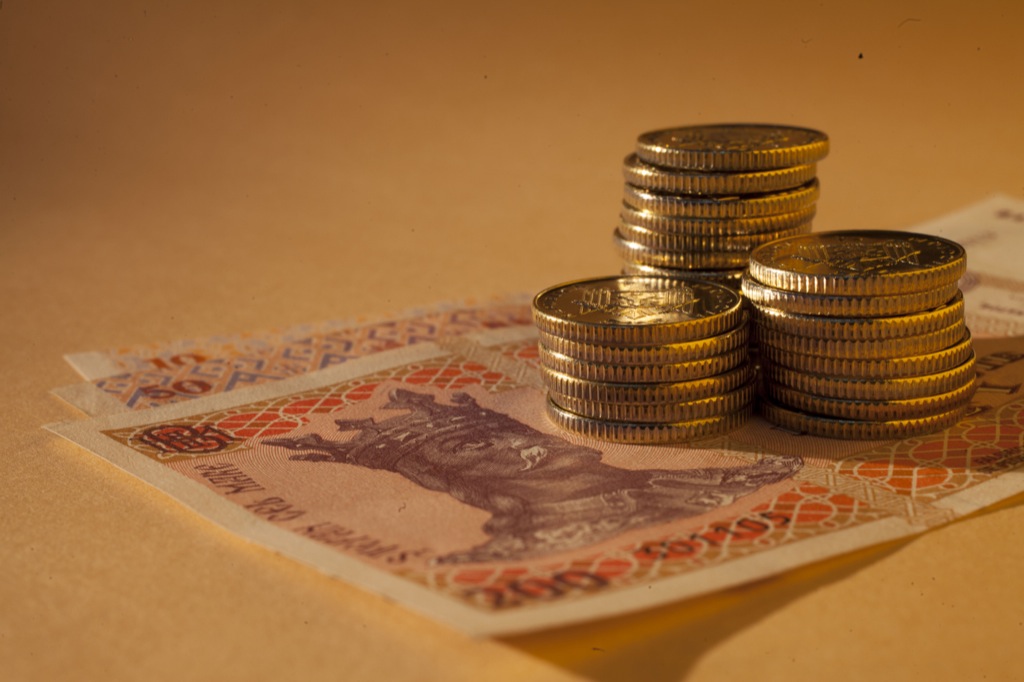
National Bank shall have the exclusive right to issue on the territory of the Republic of Moldova banknotes and coins as legal tender, as well as commemorative and jubilee banknotes and coins as legal tender and for numismatic purposes.

National Bank is exclusively responsible for the licencing, supervision and regulation of financial institutions activity.
National Bank of Moldova acts as banker and fiscal agent of the State and shall receive from state bodies economic and financial information and documents, which are necessary for carrying out its tasks.
National Bank of Moldova is an autonomous public legal entity and is responsible to the Parliament.

National Bank shall inform the public on the monetary policy strategy on the results of the macroeconomic analysis, the evolution of the financial market and on statistics, including with regard to monetary supply, crediting, balance of payments and the state of the foreign exchange market.
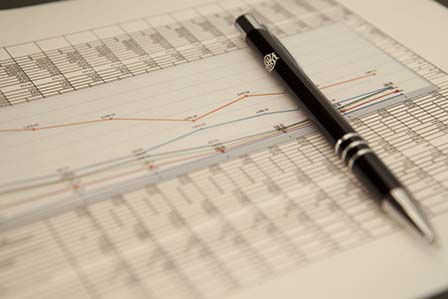
National Bank of Moldova is responsable for the compilation of the balance of payments, international investment position and the statistics of the external debt of the Republic of Moldova.
The interview was conducted on the sidelines of the international conference "New Technology for Old Markets," organized in Chisinau by the National Bank of Moldova, in partnership with the National Bank of Romania and the Bank of France.
The original interview, with French subtitles, can be viewed here: https://www.youtube.com/watch?v=u3Ht3WKzlzo
Below is the English translation of the interview:
Simona Tărtăcuță: Governor, welcome to Chișinău.
François Villeroy de Galhau: Thank you very much.
Simona Tărtăcuță: It is an honor to have you here in our almost European—or already European—capital. And it is also an honor to host you at our conference “New Technology for Old Markets.” Digital transformation, technology—such magical words. Just hearing them makes one’s head spin. In this state of reverie perhaps, could you tell us how you see the evolution of the European banking sector in the face of these new technological challenges, and in particular, with SEPA accession? What role could a country like the Republic of Moldova play in this continent-wide digital transformation?
François Villeroy de Galhau: First, thank you for your very warm words of welcome. I am delighted to be in your country, in Moldova, and in your city, Chișinău, for the very first time. I came here to bring the friendship of the Banque de France and of France. Moldova is a European country with a clear vocation to join Europe. President Macron himself said so when he visited here a few weeks ago. And at the level of our two central banks, we already have a very close cooperative relationship. This conference today is evidence of that. In January, I had the honor of signing a cooperation agreement with Governor Anca Dragu, my friend. So this event is another step in a bond of friendship and European solidarity.
It touches, of course, on a complex issue, because one might think there is a contradiction between, as the conference title suggests, “old markets,” traditional markets, and these new technologies. But I am not convinced that our markets are that old. We are also nations looking toward the future, with young populations, and with global competitors —so we must not grow old, we must look forward.
For a country like Moldova, these new technologies may accelerate change, perhaps even allow it to leapfrog certain challenges or legacy problems. You mentioned SEPA and payments. Moldova’s payment and banking systems inherited a number of difficulties, for well-known historical and economic reasons. I believe SEPA, together with technology, offers a unique opportunity to leap several steps forward. In Europe we are fortunate to have an integrated payments area. Welcome to Moldova as a member of this payments area. But, as we say in French, we must not rest on our laurels. Progress must continue, with further technological innovation.
Simona Tărtăcuță: Indeed. Moreover, the Banque de France is seen as being at the forefront of the digital euro project. Could you explain how this innovation might not only transform developed markets, but also facilitate inclusion in transition economies such as that of the Republic of Moldova? What do you see as the main technological and regulatory challenges?
François Villeroy de Galhau: By coincidence, you ask this on the very day of an important informal ECOFIN meeting in Copenhagen under the Danish presidency, gathering finance ministers and central bank governors to discuss the digital euro. What is the justification, the rationale, for this project? The mission of a central bank has always been to issue central bank money that inspires absolute trust among citizens: a risk-free asset, accessible, free of charge, and universally accepted.
The Banque de France was founded more than two centuries ago—like many central banks—to issue banknotes. At that time, paper money was a major step forward compared with metallic currency, gold and silver. But we are no longer in the 19th century—we are in the 21st. We all know that money has largely become digital and dematerialized, which has been a major benefit for citizens. The idea of the digital euro is that the central bank must continue to issue safe, accessible, free, universal central bank money—but using the technology of the 21st century, namely digital. It combines the best of central banking—trust and stability—with the best of digital technology and its possibilities.
Of course, this is an ambitious technological project. It also requires legislative approval from the European Council and the European Parliament. But I am confident that, within about three years, we will be able to offer European citizens a digital euro. And will this digital euro be used beyond the euro area, as banknotes are today? That will be for citizens to decide. But there is no reason why the digital euro should be confined strictly to euro area borders. It could therefore also be an asset for transition economies.
Simona Tărtăcuță: Perhaps to return to the main theme of today’s conference—artificial intelligence. AI is already transforming banking supervision and risk management. How do you see the balance between innovation and financial security, especially in terms of protecting consumers as AI becomes integrated?
François Villeroy de Galhau: With AI, you touch on an issue common to all technological revolutions: they bring great opportunities, but also risks. Our role as supervisors and regulators is to find the right balance. Let me stress the opportunities first. We must not be afraid of AI. It can save enormous amounts of time in research and routine, programmable tasks—thereby freeing up time for creativity and productivity. That is good news for the economy. Economists still debate how much additional growth AI might bring each year: is it 0.2%? Is it 1%? But even the lower estimate is very significant annually.
At the same time, there are risks. One that particularly concerns us as supervisors is the so-called “black box” risk. Imagine a bank delegating its risk analysis to an AI algorithm it does not control. That cannot be accepted. Of course, banks may use AI. They already use expert systems. We at the Banque de France also use them. But never a “black box” syndrome. In other words, users of an AI algorithm must understand and control both its content and its outputs. An algorithm that cannot be understood or controlled is dangerous, and unacceptable to us as supervisors. And yes, that requires substantial training efforts within our central banks and supervisory authorities to equip our own teams with AI knowledge. That is the best way to avoid fear—by mastering the tool.
Simona Tărtăcuță: If I may, a more personal question. Looking back at the start of your career in the late 1980s—did you witness an innovation then that could be seen as a foundation for today’s changes?
François Villeroy de Galhau: I have now nearly 45 years of professional life behind me, and so much has happened, often in unexpected ways. One key lesson from the 1980s is that we could never have imagined the fall of communism and the Iron Curtain. That was a major transformation for countries like Moldova, and a fortunate one for Europe. We dreamed of the euro as a single currency, but we did not truly believe it could be achieved. And yet, it was. Of course, some geopolitical changes have been less happy. Today we see tensions, including the terrible war in Ukraine, unleashed by Russia. We must adapt to geopolitical change, for better or worse. Technological change has also come in waves. In the early 1980s, we were just absorbing the rise of mass computing. I recall predictions then that banking would become “the steel industry of tomorrow,” with massive job losses due to IT. That never happened. On the contrary, IT enabled banks to develop new services. The next great disruption was, of course, the internet—which did not exist in the 1980s. Nor did mobile telephony. Looking back, these innovations justify a certain optimism about the future. Technological change cannot always be foreseen, but overall, it has brought immense benefits to our lives. Regulators should not close their eyes to these changes, but nor should they fear technological innovation—it is what drives human progress.
And this is the message I also bring to this conference: a message of confidence. Innovation is positive. It does not eliminate our role. On the contrary, for innovation to truly inspire trust, we must do our job.
Simona Tărtăcuță: Governor, thank you for this message and this note of optimism. Do you have a final word for Moldova’s youth, who are ready to embrace these new technological challenges?
François Villeroy de Galhau: Moldova’s youth are the hope of your country, and indeed of Europe. I mentioned earlier the extraordinary geopolitical shifts we have witnessed. Young people may sometimes feel their lives will be harder than those of the previous generation. I do not believe so. While economic and technological progress has slowed somewhat in terms of growth, we continue to move forward. That must be the meaning of our monetary, financial, and economic engagement. For my part, I always think of what our work represents for the youth of France and Europe.
Simona Tărtăcuță: A truly beautiful message. Governor, thank you for your time and for your presence here in Chișinău.
François Villeroy de Galhau: Thank you again.


