Welcome to the official website of the National Bank of Moldova!
×
Do you have good eyesight and want to turn this tool off?



Welcome to the official website of the National Bank of Moldova!
You can choose one of the most popular reports from the list:

National Bank and the members of its decision-making bodies shall be independent in exercising the tasks conferred upon them by law, and shall neither seek nor take instructions from public authorities or from any other authority.

In order to ensure and maintain price stability over the medium term, the National Bank’s aim will be to keep inflation (measured by Consumer Price Index) at the level of 5.0 percent annually with a possible deviation of ± 1.5 percentage points, considered to be optimal for growth and development of Moldova's economy over the medium-term.

Financial stability is achieved by strengthening the resilience of the financial system, limiting the contagion effect and reducing the accumulation of systemic risks, thus contributing to the sustainability of the financial sector and economic growth.
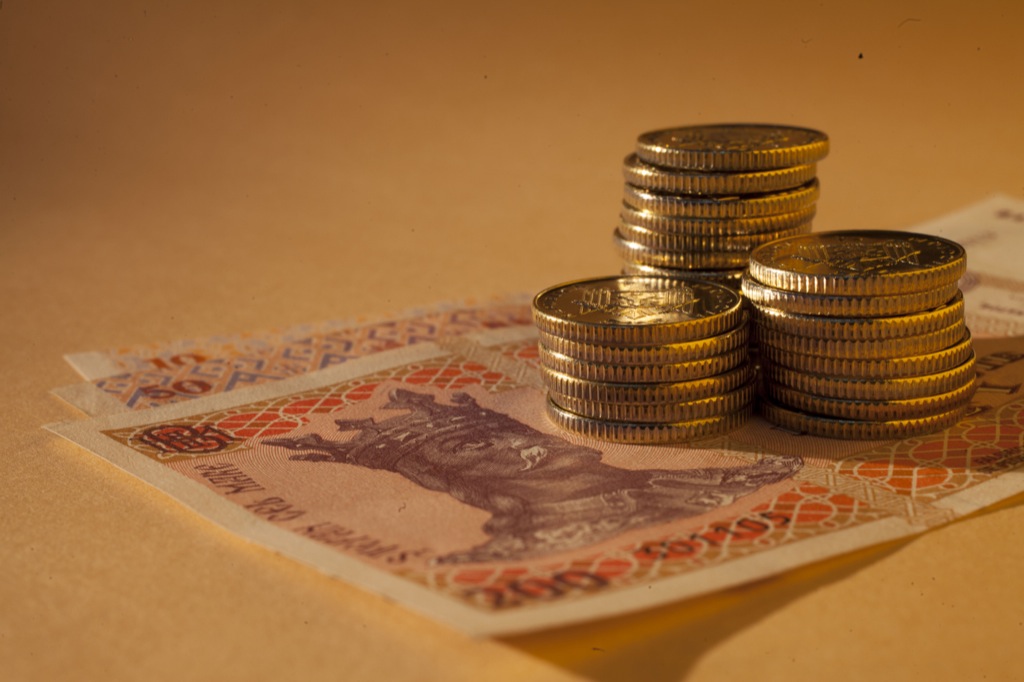
National Bank shall have the exclusive right to issue on the territory of the Republic of Moldova banknotes and coins as legal tender, as well as commemorative and jubilee banknotes and coins as legal tender and for numismatic purposes.

National Bank is exclusively responsible for the licencing, supervision and regulation of financial institutions activity.
National Bank of Moldova acts as banker and fiscal agent of the State and shall receive from state bodies economic and financial information and documents, which are necessary for carrying out its tasks.
National Bank of Moldova is an autonomous public legal entity and is responsible to the Parliament.

National Bank shall inform the public on the monetary policy strategy on the results of the macroeconomic analysis, the evolution of the financial market and on statistics, including with regard to monetary supply, crediting, balance of payments and the state of the foreign exchange market.

National Bank of Moldova is responsable for the compilation of the balance of payments, international investment position and the statistics of the external debt of the Republic of Moldova.
The year 2023 was marked by the maintenance of a complicated geopolitical context and, on the economic front, by a steady process of disinflation and a slow return of the economy to an upward trend. The timely and opportunely configured tight monetary policy stance together with measures to ensure the country's energy independence and other external factors contributed to these remarkable results. The effects of monetary policy decisions through the transmission mechanism have resulted in inflation returning to within ±1.5 percentage points of the 5.0% target in October 2023 and remaining within this range so far.
In 2023, Moldova's economy recorded a slight growth of 0.7% after a decline in 2022. In this respect, disinflationary pressures from the aggregate demand deficit and a negative fiscal impulse, lower energy and food prices on the regional market, together with the government support provided to the population overlapping with the propagation of measures previously adopted by the National Bank of Moldova to limit lending, made it possible to reduce inflation and return interest rates to an acceptable level.
This outlines favorable prospects for the future in the EU accession negotiation process, and the major contribution of the NBM is visibly reflected in making Moldova an attractive destination for investors.
The monetary policies of the NBM, geared towards ensuring sufficient liquidity in the banking system, have provided the necessary conditions for lending to the real sector. Investors' appetite for state securities (SS) continued to grow, with a historical peak in the total volume of circulating SS and a four times higher net issues value compared to the previous year. The Ministry of Finance issued 10-year maturity bonds for the first time, reflecting growing confidence of investors in state-issued instruments.
2023 was a year of improvement in the foreign exchange market. As the external trade deficit narrowed and confidence in the national currency was restored, it strengthened against both the euro and the US dollar, in contrast to the previous year when it had lost ground amid geopolitical instability and economic recession. The increase in official reserve assets by 21.9% to USD 5.45 billion ensured a high degree of foreign exchange reserve adequacy, which shows the resilience of our economy to crisis situations and thus being a positive signal for investors and creditors.
Moldova's banking system is stable, sound, well capitalized and well governed thanks to the implementation of reforms. The resilience of Moldovan banks has been demonstrated during multiple crises: despite all challenges, our banks have remained robust. The effectiveness of the banking reform is widely recognized and appreciated, including by our partners and international organizations. At the same time, we are also mindful of the expectations of the beneficiaries of financial services, especially small- and medium-sized enterprises, which have the potential to grow the economy.
We are also very active in the field of payment services, which are essential for both citizens and companies. On January 30, 2024, the NBM submitted the Moldovan application to join the Single Euro Payments Area (SEPA) to the European Payments Council. SEPA membership is beneficial for all participants as it ensures fast, transparent and secure payments at sustainable costs. On March 12, 2024, the National Bank launched, for the first time for the Republic of Moldova, the "MIA" Instant Payments System, which offers citizens a fast, secure and inexpensive way to make transactions.
The NBM is involved in Moldova's European integration. We have a leading role in 3 chapters of the EU accession negotiations – (i) Free movement of capital, (ii) Financial services and (iii) Economic and monetary policy. We are working on harmonizing the legislation and practices of the financial sector of the Republic of Moldova with European standards. This process of reforms for the EU accession is in itself a point of increasing investors' attention to Moldova, resulting in increased investment. In conclusion, all the reforms which will take place over the next few years and which derive from the negotiation of these chapters with the European Union represent as many reform measures which will be felt and will certainly lead to an increase in investors' confidence.
The NBM has an extensive experience in the field of banking supervision. At the same time, the strong interconnectedness between the non-bank financial market and the banking system has demonstrated the need for an integrated financial market architecture. Therefore, the regulation and supervision of these sectors was unified in 2023, when the NBM took over the competences covering the insurance and non-bank lending sectors. We are currently working hard to improve the regulation, supervision, corporate governance and risk management practices in the non-bank financial sector. We want both insurance companies and the non-bank lending market to develop and provide quality services to both citizens and companies.
The bank's independence and integrity, contribution to Moldova's European path, price stability and support of financial intermediation to boost economic activity, sustainable growth of the Moldovan economy and the convergence process are our objectives for the near future.
Moldova must become a member of the European Union. Membership of this community is a guarantee of peace, security, democracy and prosperity. These are the four fundamental elements for building a secure and stable future, which we are building together with the whole of society.
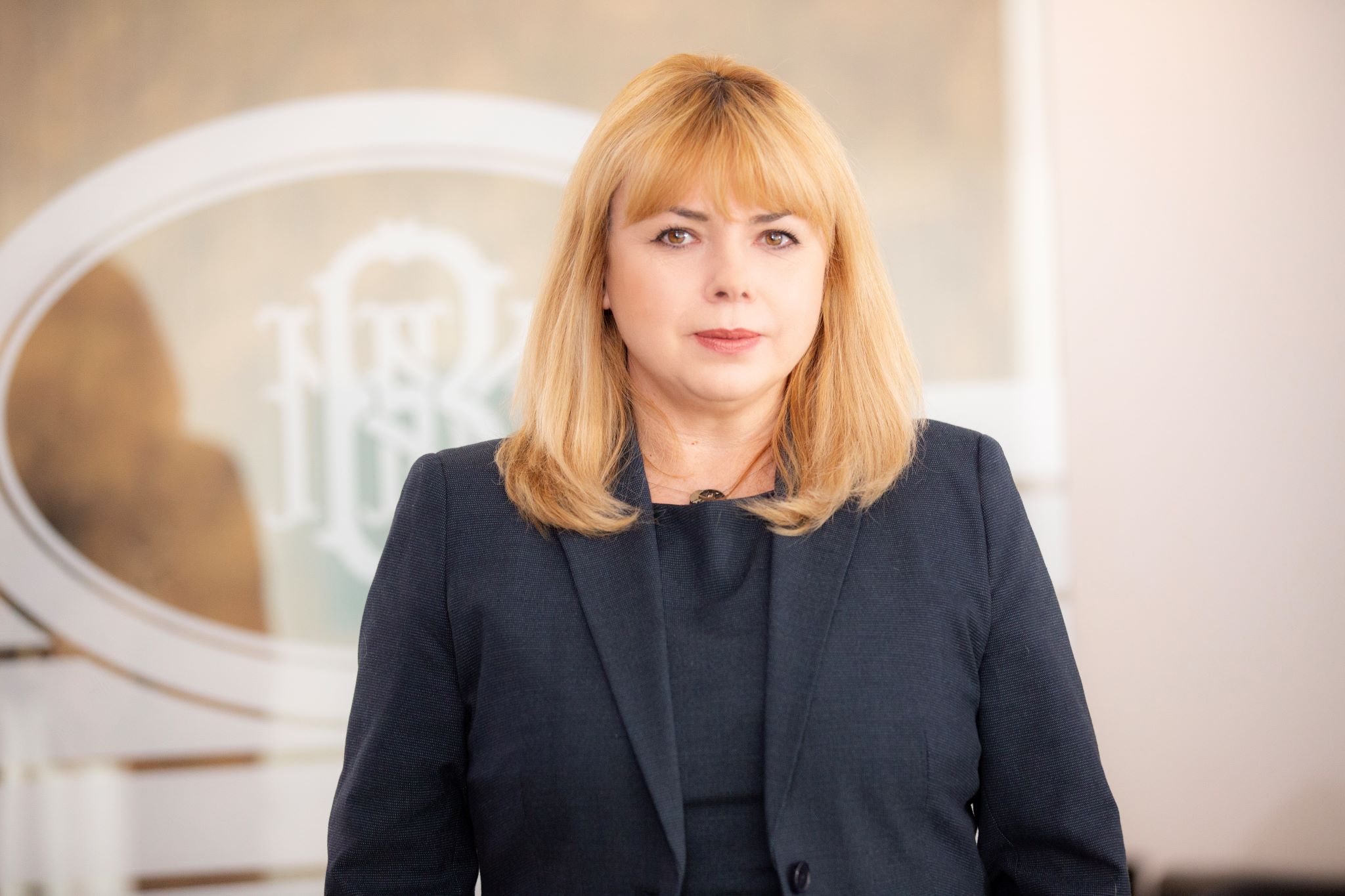
Anca-Dana Dragu
Governor


