Welcome to the official website of the National Bank of Moldova!
×
Do you have good eyesight and want to turn this tool off?



Welcome to the official website of the National Bank of Moldova!
You can choose one of the most popular reports from the list:

National Bank and the members of its decision-making bodies shall be independent in exercising the tasks conferred upon them by law, and shall neither seek nor take instructions from public authorities or from any other authority.

In order to ensure and maintain price stability over the medium term, the National Bank’s aim will be to keep inflation (measured by Consumer Price Index) at the level of 5.0 percent annually with a possible deviation of ± 1.5 percentage points, considered to be optimal for growth and development of Moldova's economy over the medium-term.

Financial stability is achieved by strengthening the resilience of the financial system, limiting the contagion effect and reducing the accumulation of systemic risks, thus contributing to the sustainability of the financial sector and economic growth.

National Bank shall have the exclusive right to issue on the territory of the Republic of Moldova banknotes and coins as legal tender, as well as commemorative and jubilee banknotes and coins as legal tender and for numismatic purposes.

National Bank is exclusively responsible for the licencing, supervision and regulation of financial institutions activity.

National Bank of Moldova acts as banker and fiscal agent of the State and shall receive from state bodies economic and financial information and documents, which are necessary for carrying out its tasks.
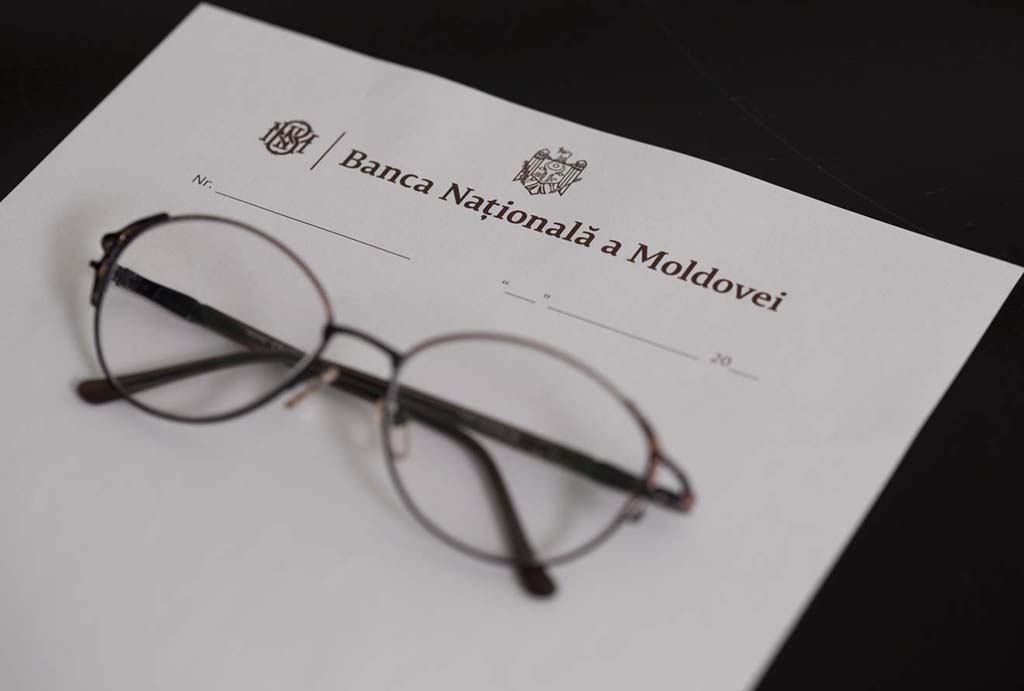
National Bank of Moldova is an autonomous public legal entity and is responsible to the Parliament.

National Bank shall inform the public on the monetary policy strategy on the results of the macroeconomic analysis, the evolution of the financial market and on statistics, including with regard to monetary supply, crediting, balance of payments and the state of the foreign exchange market.

National Bank of Moldova is responsable for the compilation of the balance of payments, international investment position and the statistics of the external debt of the Republic of Moldova.
List of Merchant Category Codes (MCC): PDF DOC
MCC (Merchant Category Codes) are used in the Instant Payment system to classify various types of businesses and commercial services. These codes are essential for the accurate processing of payment transactions and for ensuring precise recording of these transactions. Below, we will explore how MCC codes work and their importance within the country's payment systems.
MCC (Merchant Category Codes) are a numerical classification system used to identify the type of activity conducted by a merchant or service provider. For international card payment systems, these codes are defined by international organizations, such as the Card Network Board, and are utilized by banks and other financial institutions to identify a merchant's business domain. In the case of payment systems managed by the National Bank of Moldova, these codes are defined within those specific payment systems.
When a customer makes a transaction at a merchant or service provider, the payment terminal collects information about the transaction, including the MCC code associated with the merchant. This code is then transmitted to the payment processor and the payment service providers involved in the transaction, helping to identify the nature of the merchant's business and ensuring the correct application of fees and taxes.
MCC codes are vital for the efficient management of financial transactions and for ensuring compliance with payment regulations. They assist in the accurate classification of transactions and ensure that fees and taxes correspond to the merchant's line of business. Additionally, MCC codes are used for monitoring and reporting financial transactions across various economic sectors, which is crucial for analyzing and planning financial and economic policies in the Republic of Moldova
MCC codes represent an important aspect of retail payment systems in the Republic of Moldova, playing a crucial role in the processing of financial transactions and the efficient management of commercial payments. Understanding these codes is essential for all stakeholders in the financial and commercial sectors of Moldova, contributing to transparency, efficiency, and compliance in the payment process.


