Welcome to the official website of the National Bank of Moldova!
×
Do you have good eyesight and want to turn this tool off?



Welcome to the official website of the National Bank of Moldova!
You can choose one of the most popular reports from the list:
National Bank and the members of its decision-making bodies shall be independent in exercising the tasks conferred upon them by law, and shall neither seek nor take instructions from public authorities or from any other authority.

In order to ensure and maintain price stability over the medium term, the National Bank’s aim will be to keep inflation (measured by Consumer Price Index) at the level of 5.0 percent annually with a possible deviation of ± 1.5 percentage points, considered to be optimal for growth and development of Moldova's economy over the medium-term.

Financial stability is achieved by strengthening the resilience of the financial system, limiting the contagion effect and reducing the accumulation of systemic risks, thus contributing to the sustainability of the financial sector and economic growth.
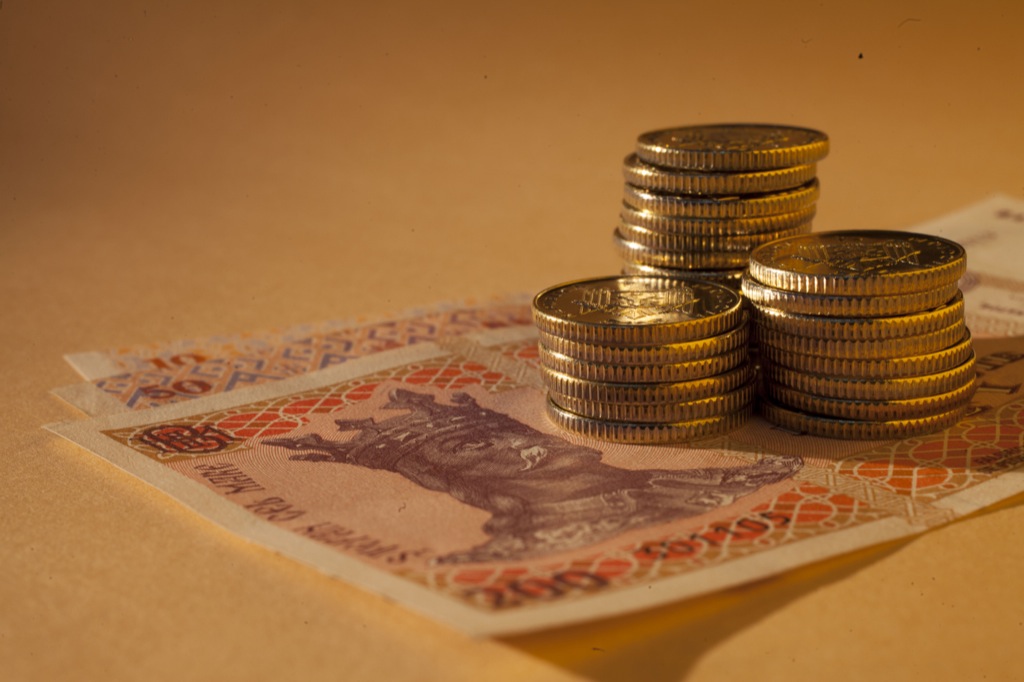
National Bank shall have the exclusive right to issue on the territory of the Republic of Moldova banknotes and coins as legal tender, as well as commemorative and jubilee banknotes and coins as legal tender and for numismatic purposes.

National Bank is exclusively responsible for the licencing, supervision and regulation of financial institutions activity.
National Bank of Moldova acts as banker and fiscal agent of the State and shall receive from state bodies economic and financial information and documents, which are necessary for carrying out its tasks.
National Bank of Moldova is an autonomous public legal entity and is responsible to the Parliament.

National Bank shall inform the public on the monetary policy strategy on the results of the macroeconomic analysis, the evolution of the financial market and on statistics, including with regard to monetary supply, crediting, balance of payments and the state of the foreign exchange market.

National Bank of Moldova is responsable for the compilation of the balance of payments, international investment position and the statistics of the external debt of the Republic of Moldova.
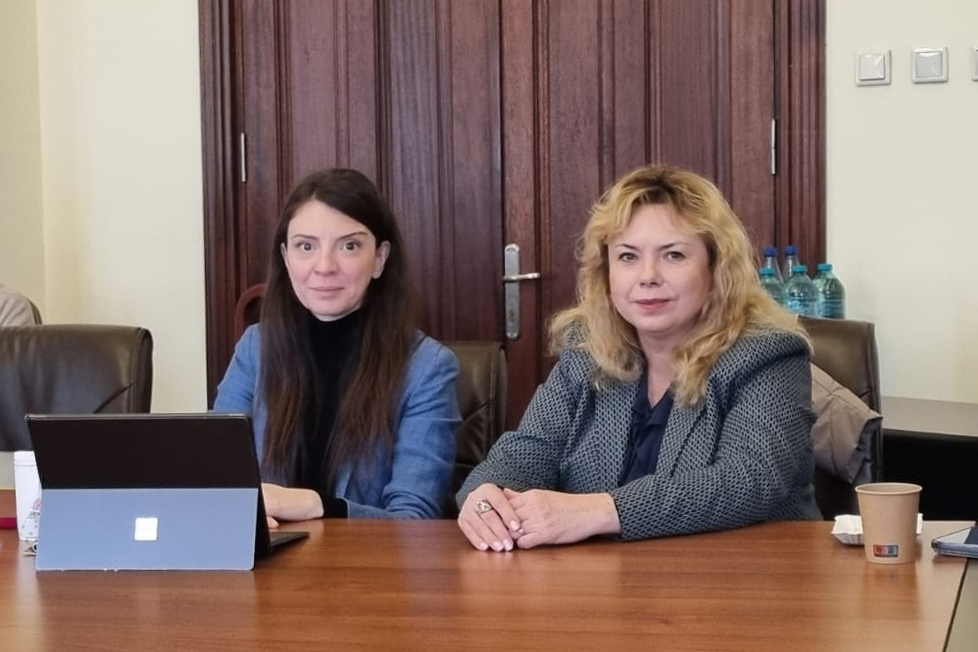
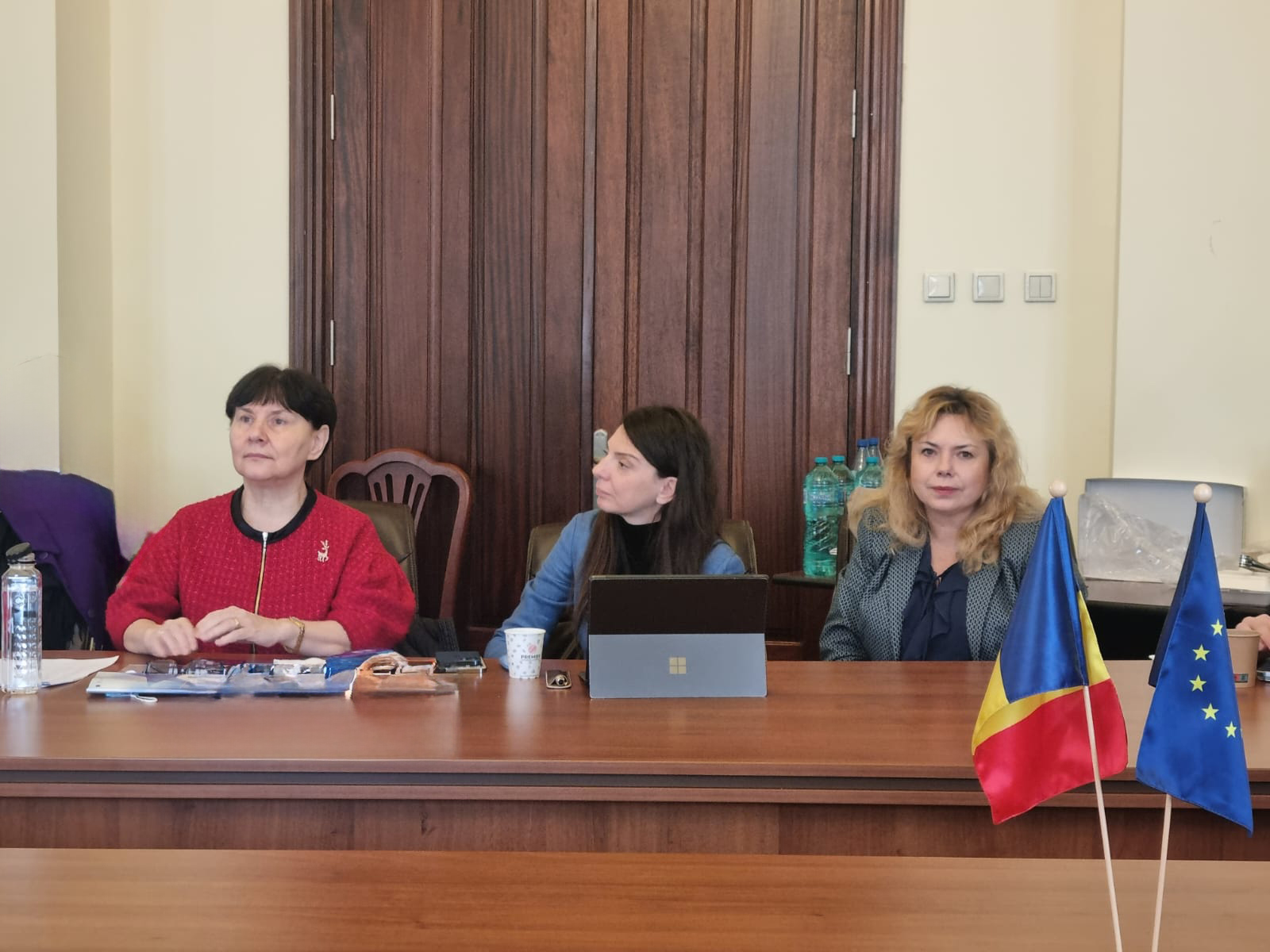
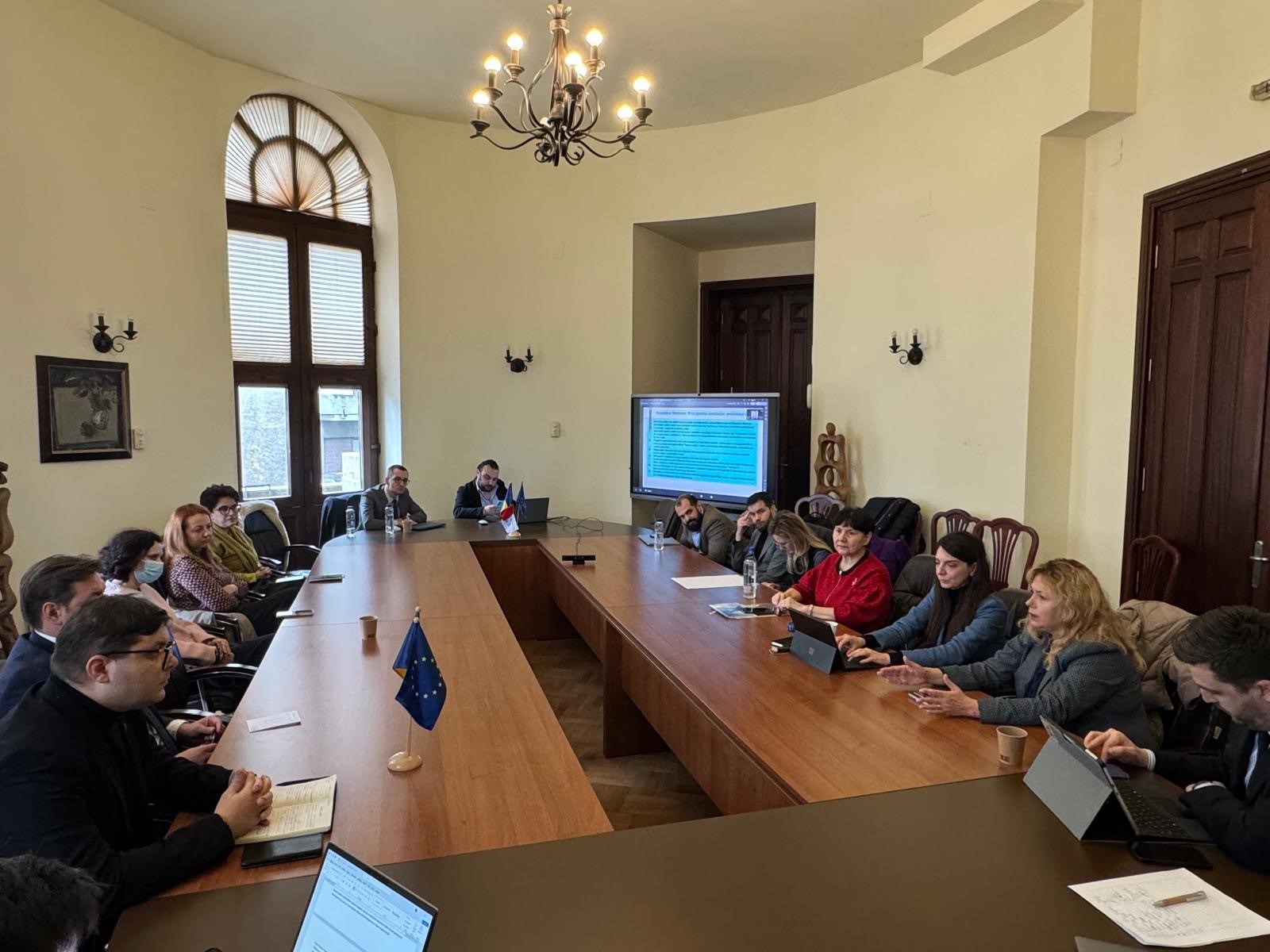
The Governor of the National Bank of Moldova, Ms. Anca Dragu, participated in a round table discussion on "Recovery and resilience at local level," organised by the Academy of Economic Studies in Bucharest and the German Marshall Fund, as part of the PEPER project: Place-based Economic Policy in EU’s Periphery – fundamental research in collaborative development and local resilience. Projections for Romania and Moldova.
The event brought together decision-makers, experts, and representatives of academia from Romania and the Republic of Moldova, who analysed how public policies and economic-financial instruments can contribute to strengthening the resilience of local communities, in the context of current economic, social, and geopolitical challenges.
In her speech, the Governor of the NBM emphasised the role of financial inclusion, modern payment infrastructure, and alignment with European standards in supporting economic development at the local level. Ms. Anca Dragu highlighted the progress made by the Republic of Moldova through its integration into the Single Euro Payments Area (SEPA), the development of the MIA instant payment system, and the formulation of the National Financial Inclusion Strategy, as concrete tools that support families, small and medium-sized enterprises, as well as local public authorities.
"Resilience at the local level is strengthened through real access to safe and accessible financial services. Through its policies and the development of modern payment infrastructure, the National Bank of Moldova supports the transition to digital payments and promotes financial education, reducing the economic vulnerabilities of the population. These tools provide communities with greater stability, support small businesses, and facilitate financial inclusion. Integration into the European financial area creates concrete opportunities for local development and strengthens citizens' trust," stated Ms. Anca Dragu.
The Governor of the NBM also mentioned that the MIA instant payment system has become an important catalyst for financial inclusion and economic resilience, already being used by half of the adult population of the country, including in rural areas. At the same time, Moldova's integration into SEPA contributes to reducing transfer costs, supporting the business environment, and facilitating remittances from the diaspora, with direct effects on local economies.
The event held in Bucharest provided a platform for regional and European dialogue on sustainable development policies, financial stability, and strengthening economic resilience, for the benefit of citizens and local communities.


