Welcome to the official website of the National Bank of Moldova!
×
Do you have good eyesight and want to turn this tool off?



Welcome to the official website of the National Bank of Moldova!
You can choose one of the most popular reports from the list:
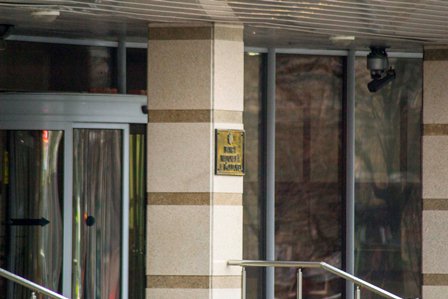
National Bank and the members of its decision-making bodies shall be independent in exercising the tasks conferred upon them by law, and shall neither seek nor take instructions from public authorities or from any other authority.
In order to ensure and maintain price stability over the medium term, the National Bank’s aim will be to keep inflation (measured by Consumer Price Index) at the level of 5.0 percent annually with a possible deviation of ± 1.5 percentage points, considered to be optimal for growth and development of Moldova's economy over the medium-term.

Financial stability is achieved by strengthening the resilience of the financial system, limiting the contagion effect and reducing the accumulation of systemic risks, thus contributing to the sustainability of the financial sector and economic growth.
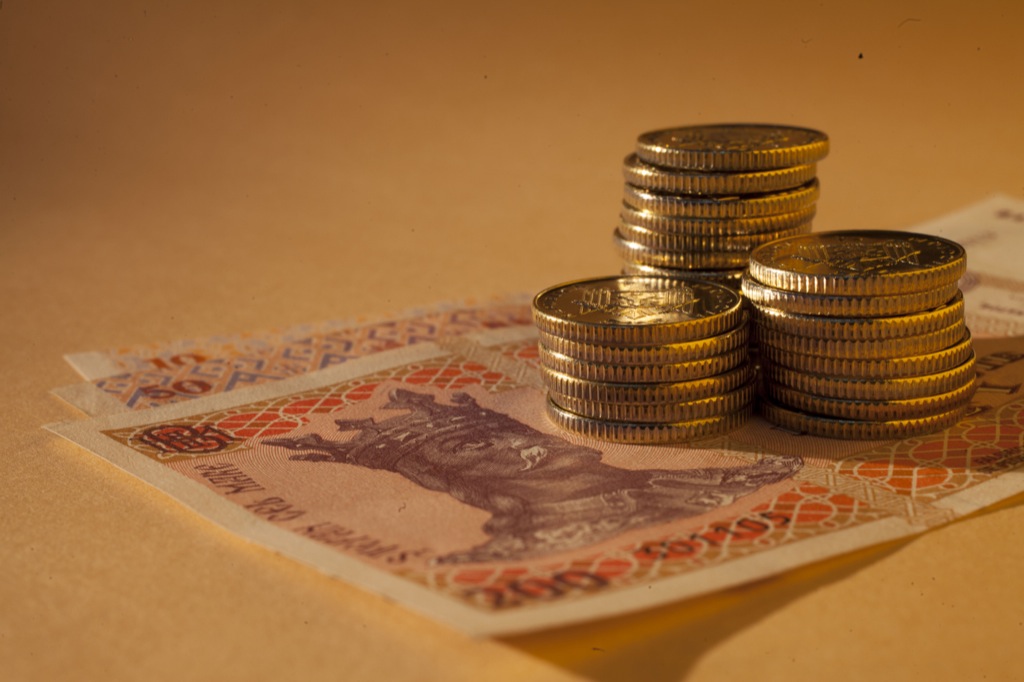
National Bank shall have the exclusive right to issue on the territory of the Republic of Moldova banknotes and coins as legal tender, as well as commemorative and jubilee banknotes and coins as legal tender and for numismatic purposes.

National Bank is exclusively responsible for the licencing, supervision and regulation of financial institutions activity.
National Bank of Moldova acts as banker and fiscal agent of the State and shall receive from state bodies economic and financial information and documents, which are necessary for carrying out its tasks.
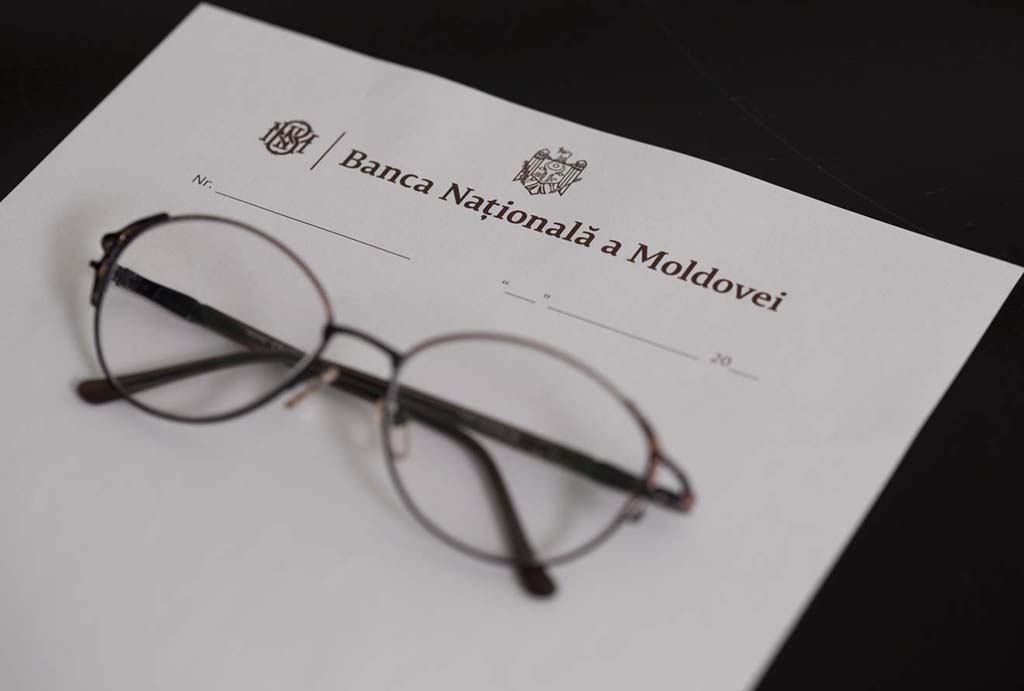
National Bank of Moldova is an autonomous public legal entity and is responsible to the Parliament.

National Bank shall inform the public on the monetary policy strategy on the results of the macroeconomic analysis, the evolution of the financial market and on statistics, including with regard to monetary supply, crediting, balance of payments and the state of the foreign exchange market.

National Bank of Moldova is responsable for the compilation of the balance of payments, international investment position and the statistics of the external debt of the Republic of Moldova.
Today, October 6, 2025, Republic of Moldova becomes an operational part of the Single Euro Payments Area (SEPA) – the infrastructure that brings together 41 European countries and provides citizens and companies with fast, secure and low, even down to zero cost - euro transfers.
"Moldova's integration into SEPA is a historic moment for the national financial system and confirms the country's European path. This achievement eliminates administrative barriers and brings direct European standards in the daily life of people and businesses in the Republic of Moldova,” said Mrs. Anca Dragu, governor of the National Bank of Moldova, the institution that coordinated and implemented the SEPA accession process.
SEPA (Single Euro Payments Area) is the European framework that allows euro transfers between payment systems among participating countries, under the same cost, security and processing time, regardless of borders. SEPA brings together all the member states of the European Union, as well as the United Kingdom, countries of the European Economic Area, Switzerland, Andorra, Monaco, San Marino and the Vatican.
Questions/answers about the benefits of joining SEPA
Moldova's accession to SEPA brings immediate and tangible benefits for citizens, diaspora, companies and the entire economy.
For citizens and families in the diaspora, transfers in euro become faster, secure and at much lower costs, sometimes even with zero commission, depending on the services of the participating banks. If previously an international transfer could cost between 20 and 200 euros, now it will be processed at the same standards and tariffs as in the European Union, for only a few euros or even for free. Thus, remittances will arrive home faster and at a lower cost, which means more money directly into the budget of each consumer.
For the business, SEPA removes administrative barriers and brings Moldovan companies to the level of equality with European ones. Over 60% of Moldova's exports are oriented towards the EU, while low trading costs increase competitiveness and facilitate trade and investment. Statistics show that in 2024, about 830,000 euro transactions were made between Moldova and SEPA countries with a total value of 11.8 billion euros, that is, daily over 3,200 payments worth 45 million euros. From now on, these financial flows will be managed much more efficiently, at low cost, directly through the SEPA system.
At the macroeconomic level, integration into SEPA generates direct savings estimated at around EUR 20 million, resources that remain in the economy for investment, business development and jobs. At the same time, accession sends a strong signal of stability and credibility to international partners and investors.
Currently, eight commercial banks in the Republic of Moldova have obtained SEPA Participant status and can process payments in euro at the same standards as in the European Union. It guarantees faster, more secure and low-cost transfers in line with the rules of the European payment system.
The National Bank of Moldova stresses that each client must consult the bank where he/she is serviced to find out the terms of transfers through SEPA, including tariffs and types of services available (standard payments or instant payments).
The accession process was coordinated by the NBM together with the Moldovan Banks Association, as NASO – National Accession Support Organization.
The expansion process continues, and in the coming period other payment service providers, including non-bank operators, can become SEPA participants, contributing to the modernisation of the local payments market.
"This moment is the result of a joint effort by the teams of the National Bank, Government, Parliament, our European and international partners. I thank all those who have been involved in making this project a reality,” said the governor of the National Bank of Moldova, Mrs. Anca Dragu, in a video message published in the context of the country's operational integration in SEPA. [Link to video message]
The central bank governor stressed that "SEPA is about people, trust and the future. About families who will get their money on time. About businesses that can do business in Europe with the same simplicity and security as in any other european state. About an economy that is gaining speed, resources and credibility”.
According to Mrs. Anca Dragu, this achievement confirms Moldova's european path and sends a signal of confidence to investors, showing that our financial system is stable, modern and aligned with European standards.
For the effort and involvement in the process of integration of the Republic of Moldova into the European SEPA payment system, in May 2025, Governor Anca Dragu was awarded the Leadership Award during the Future Economy Gala - Women & Men CEOs Leading the Romanian Economy.
Republic of Moldova initiated the accession process to the Single Euro Payments Area (SEPA) on January 30, 2024, by submitting an official application to the European Payments Council (EPC).
On March 6 2025, EPC approved the inclusion of the Republic of Moldova in the SEPA geographical area, recognising the substantial progress made in aligning the prudential and regulatory framework with European standards.
On October 6, 2025, Republic of Moldova became an operational part of SEPA, thus achieving a major milestone of European financial integration, which facilitates access of the population and businesses to modern, efficient and competitive payment services.


