Welcome to the official website of the National Bank of Moldova!
×
Do you have good eyesight and want to turn this tool off?



Welcome to the official website of the National Bank of Moldova!
You can choose one of the most popular reports from the list:

National Bank and the members of its decision-making bodies shall be independent in exercising the tasks conferred upon them by law, and shall neither seek nor take instructions from public authorities or from any other authority.

In order to ensure and maintain price stability over the medium term, the National Bank’s aim will be to keep inflation (measured by Consumer Price Index) at the level of 5.0 percent annually with a possible deviation of ± 1.5 percentage points, considered to be optimal for growth and development of Moldova's economy over the medium-term.

Financial stability is achieved by strengthening the resilience of the financial system, limiting the contagion effect and reducing the accumulation of systemic risks, thus contributing to the sustainability of the financial sector and economic growth.

National Bank shall have the exclusive right to issue on the territory of the Republic of Moldova banknotes and coins as legal tender, as well as commemorative and jubilee banknotes and coins as legal tender and for numismatic purposes.

National Bank is exclusively responsible for the licencing, supervision and regulation of financial institutions activity.

National Bank of Moldova acts as banker and fiscal agent of the State and shall receive from state bodies economic and financial information and documents, which are necessary for carrying out its tasks.
National Bank of Moldova is an autonomous public legal entity and is responsible to the Parliament.

National Bank shall inform the public on the monetary policy strategy on the results of the macroeconomic analysis, the evolution of the financial market and on statistics, including with regard to monetary supply, crediting, balance of payments and the state of the foreign exchange market.

National Bank of Moldova is responsable for the compilation of the balance of payments, international investment position and the statistics of the external debt of the Republic of Moldova.
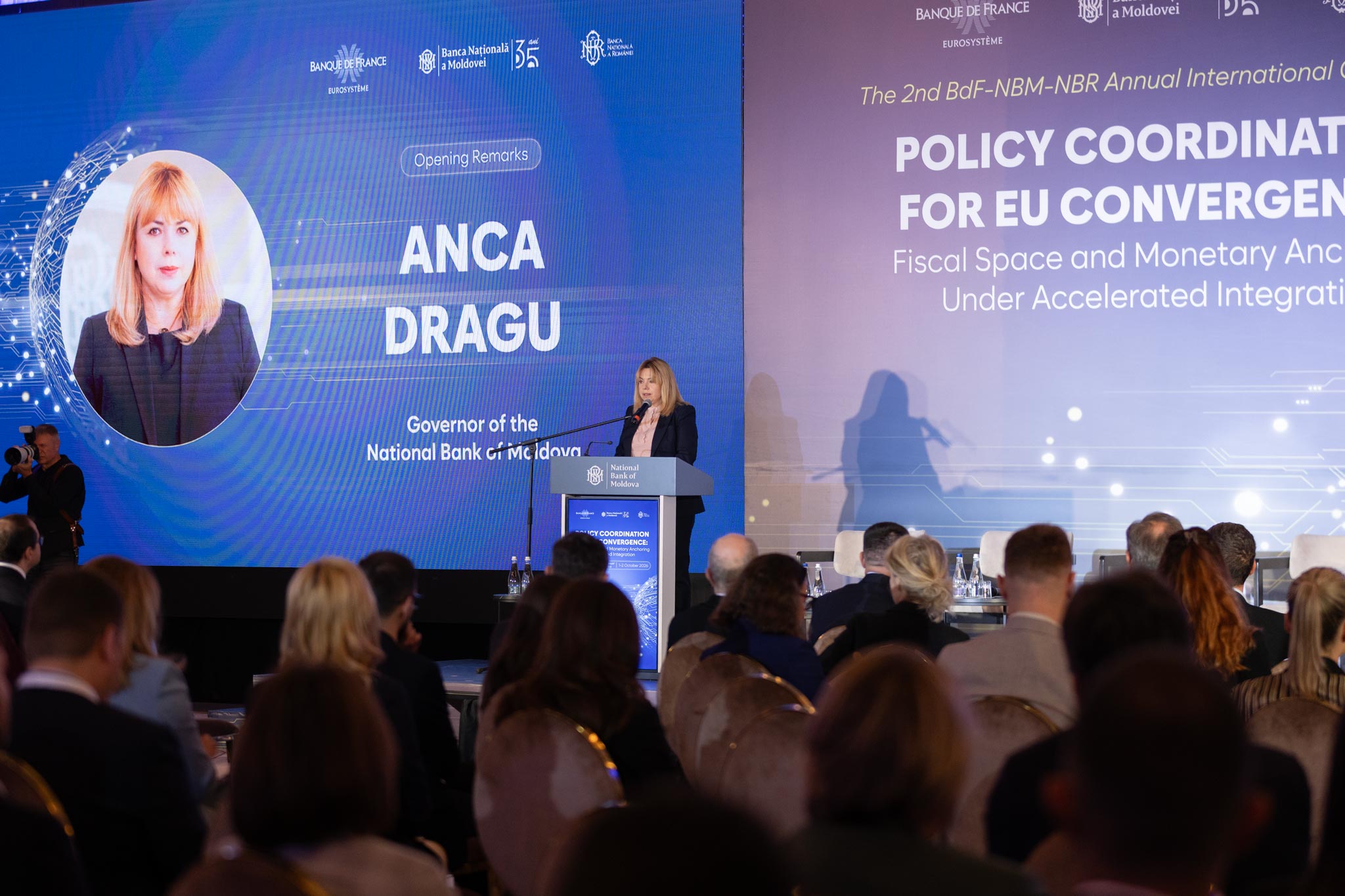
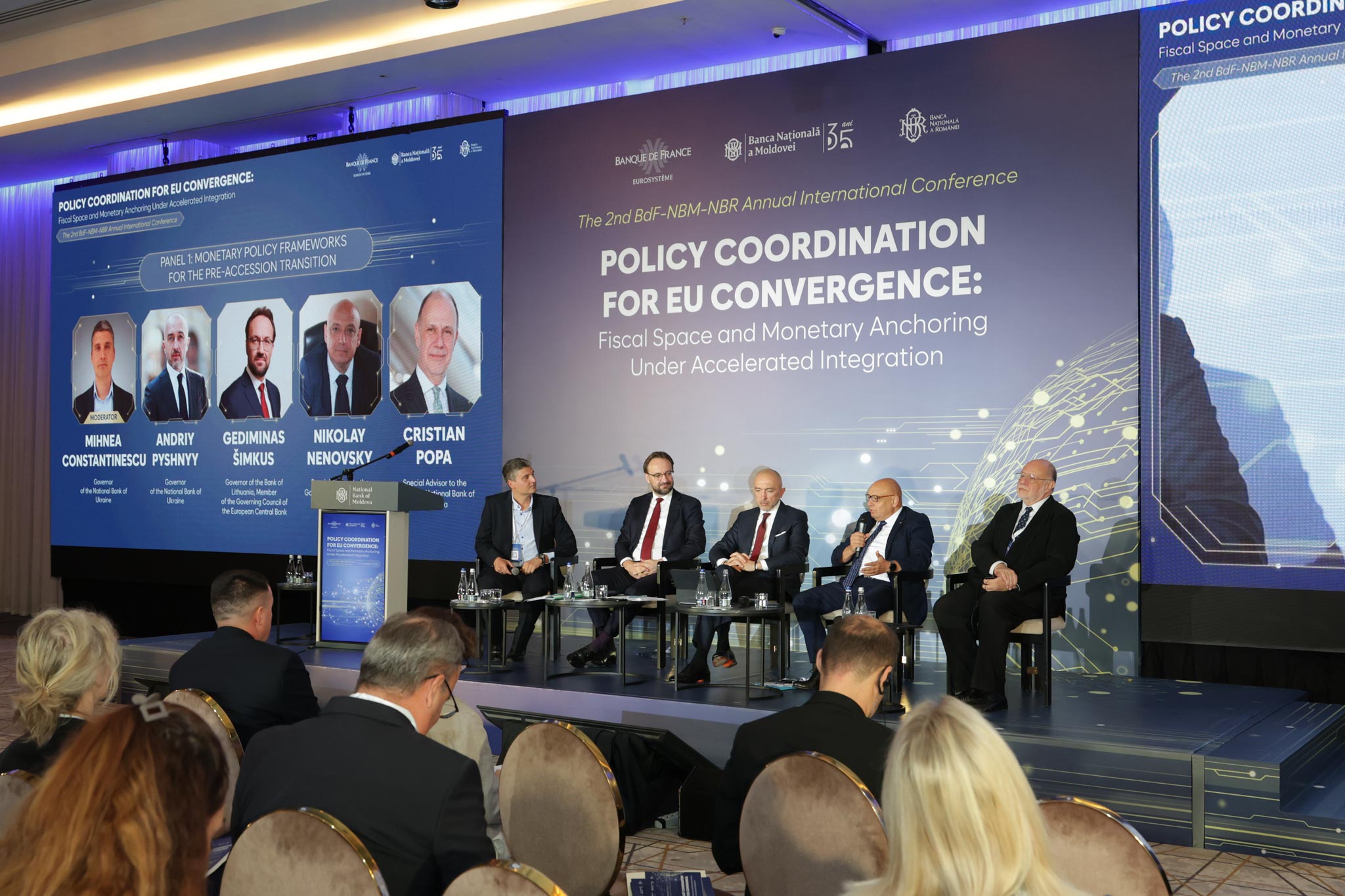
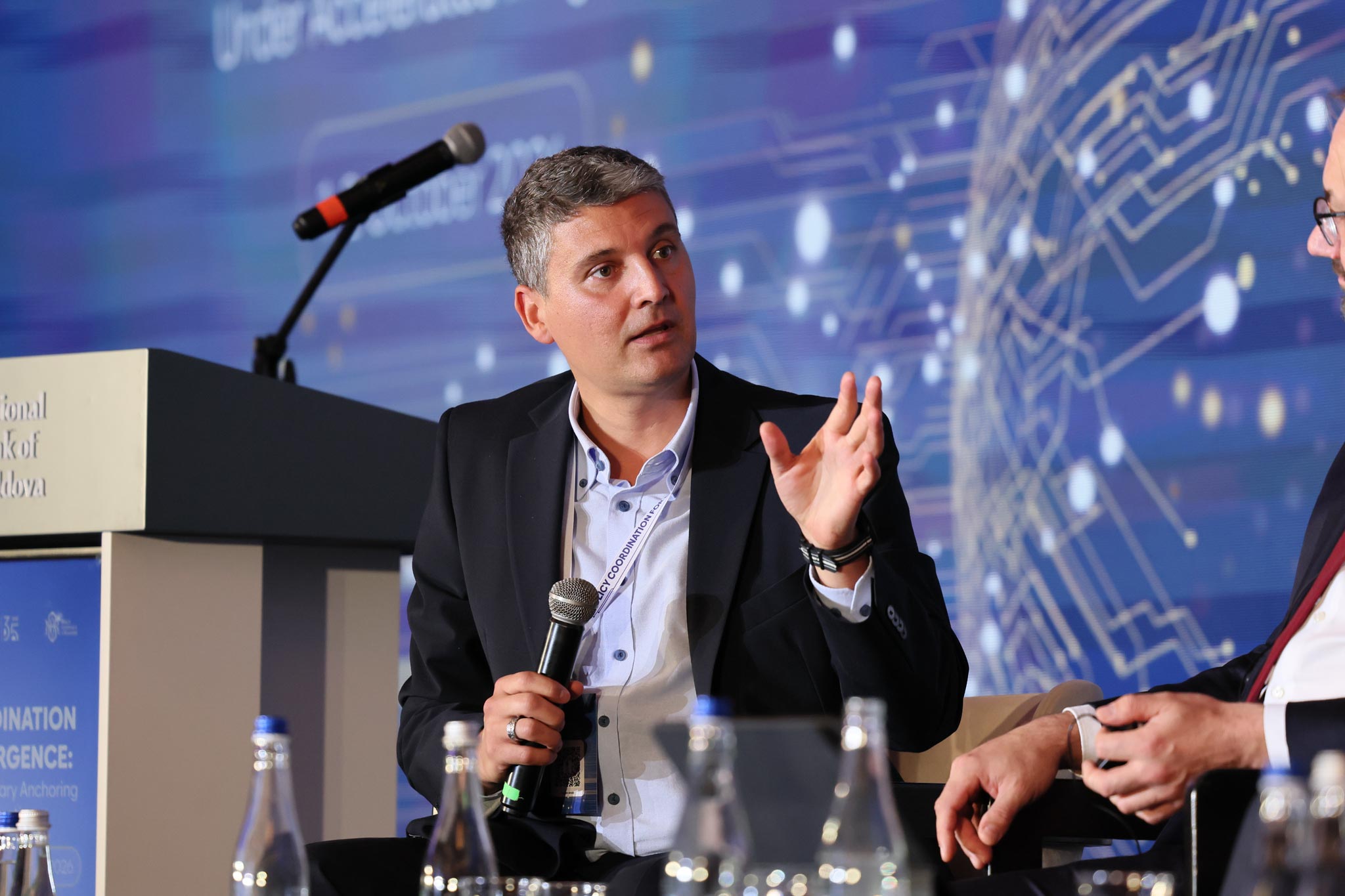
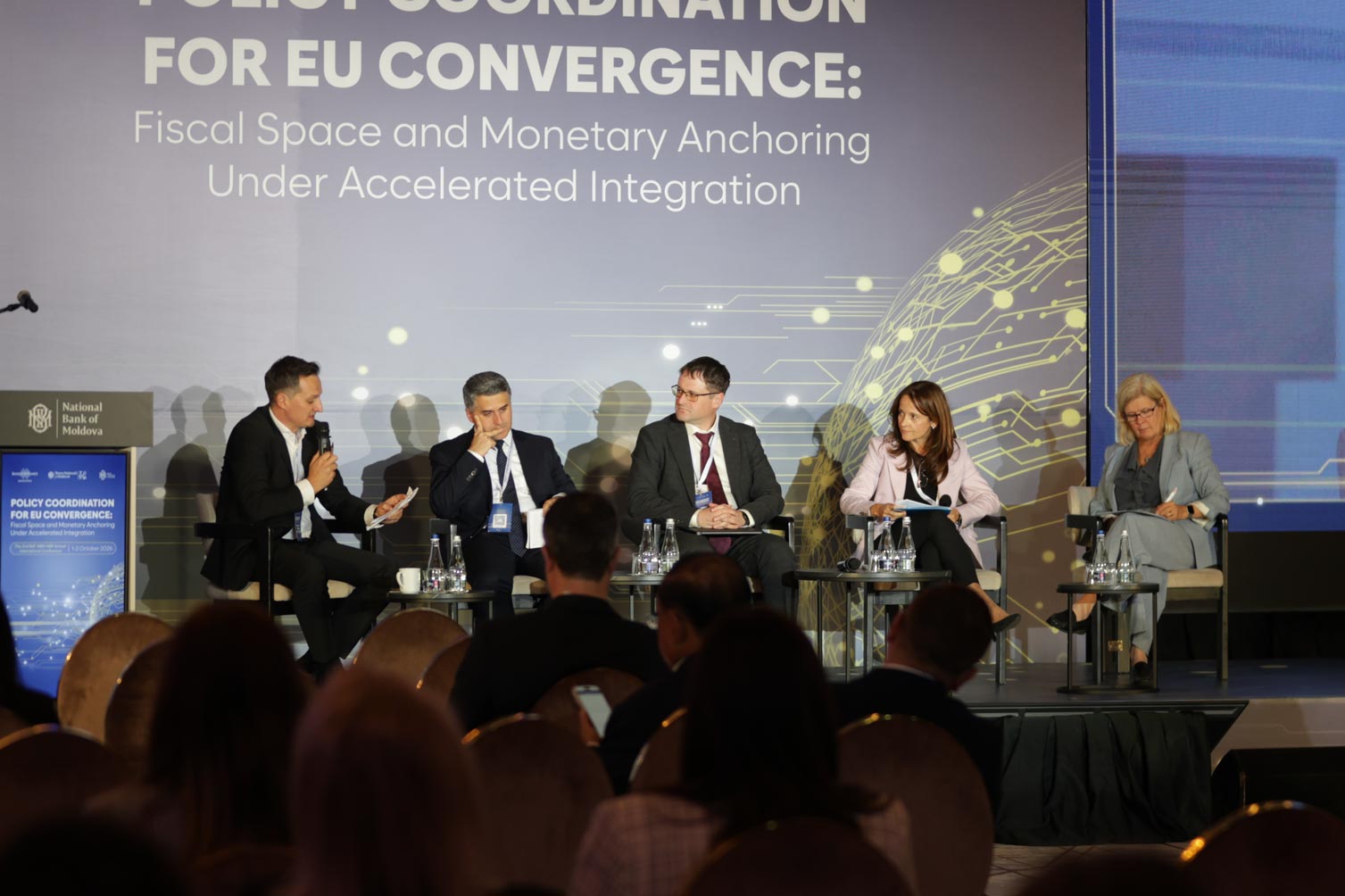
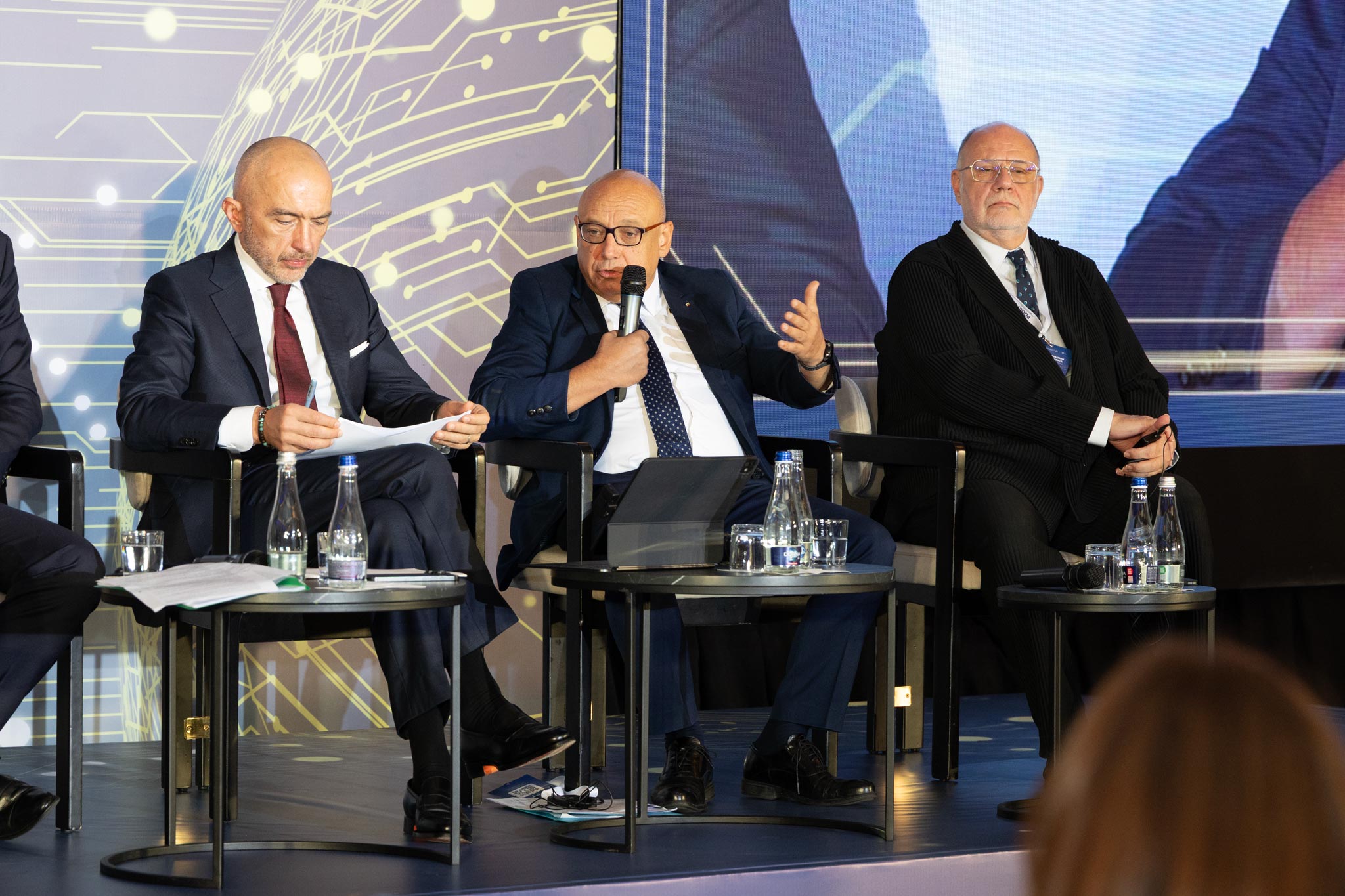
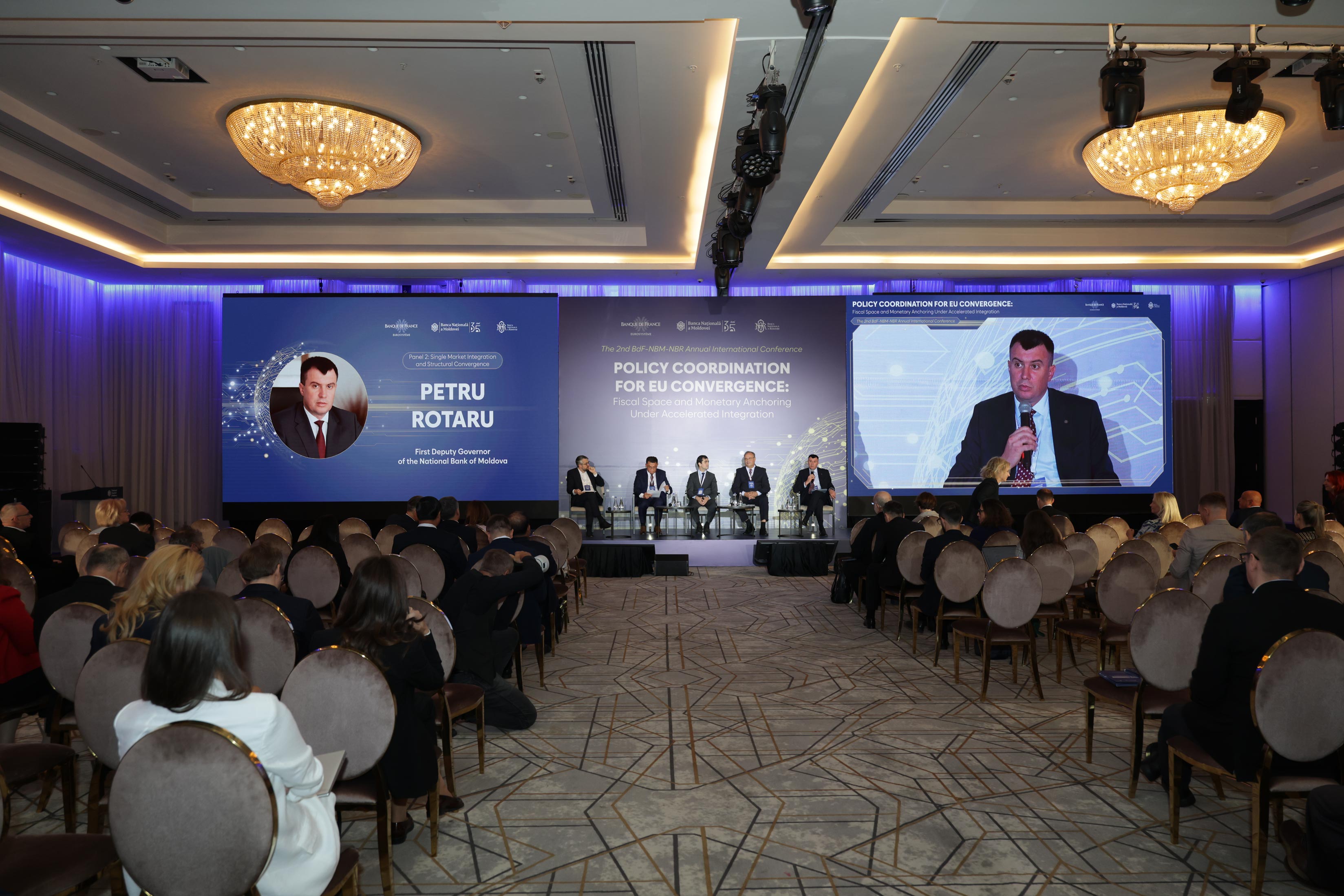
Over two days, on 1-2 October 2026, Chișinău hosted an international dialogue on fiscal space and monetary anchoring in the context of the Republic of Moldova’s accelerated integration into the European Union, and on the economic policies that can support this process. Organised by the National Bank of Moldova (NBM), in partnership with the National Bank of Romania (NBR) and the Banque de France, the event brought together senior European Union officials, central bank leaders, representatives of international financial institutions and researchers to discuss stability, investment and economic development.
The second edition of the Annual International Conference, entitled “Policy Coordination for EU Convergence”, placed at the centre of the discussions a question with direct implications for citizens and businesses: how can reforms and economic policies be coordinated to ensure that European integration delivers more financing opportunities, more accessible services and an economy better equipped to withstand shocks?
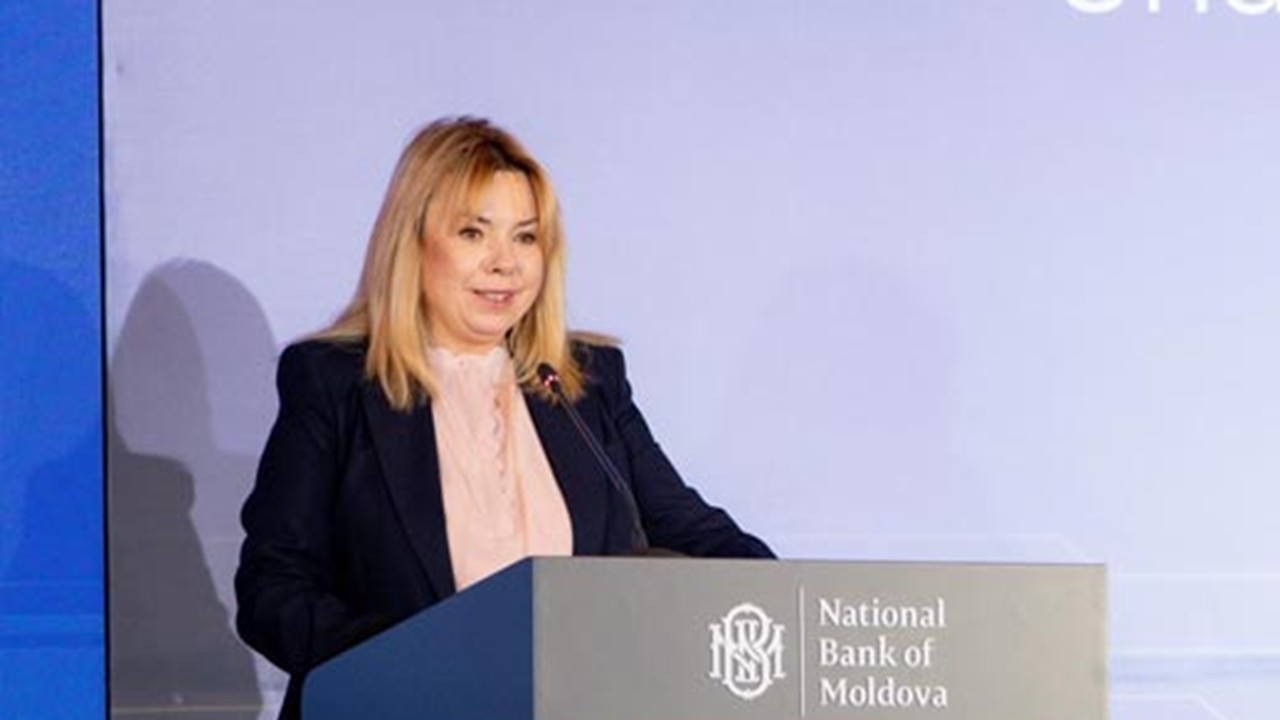
The conference was opened by Ms Anca Dragu, Governor of the National Bank of Moldova, who emphasised that European integration requires a daily commitment to reform and institutional adaptation.
To illustrate the diversity of paths towards European integration, the NBM Governor drew a comparison with winemaking. Just as the quality of wine is influenced by the soil, grape variety and weather, each economy starts from different conditions and faces its own shocks. “Yet the goal is shared: we start with different soils, but work towards the same standard,’ Ms Anca Dragu emphasised. In this context, the Governor highlighted the experience of Moldovan winemakers, who responded to embargoes by improving quality and turning towards European markets, where their wines now enjoy considerable success.
“Convergence does not follow a single path. There are several routes, each shaped by its own reforms and, often, its own crises,” Governor Anca Dragu noted.
The comparison also illustrated the importance of coordinating economic policies. The Governor explained that a central bank contributes to economic stability, while the outcome depends on institutions working together and aligning the measures they adopt.
“When policies are designed to work together, convergence is faster, less costly and more resilient to shocks,” the central bank Governor stated.
Among the benefits of moving closer to European standards, Ms Anca Dragu highlighted stronger institutional credibility and lower financing costs for the government, businesses and households. At the same time, the development of capital markets can channel savings into investment, provide longer-term financing and create alternatives to bank lending.
For the Republic of Moldova, financial integration is already delivering tangible results for citizens and businesses. The Governor cited participation in SEPA as a concrete example, making euro transfers more affordable and faster.
Building on these points, Mr Vasile Tofan, Prime Minister of the Republic of Moldova, addressed the country’s economic priorities in the process of European integration. He emphasised that Moldova has a well-capitalised and liquid banking system, and that the current challenge is to harness this stability to support the development of the real economy.
“Financial stability must be translated into investment and economic growth,” the Prime Minister stressed.
Mr Vasile Tofan noted that the Republic of Moldova now enjoys greater confidence among investors and external partners, thanks to its clear path towards European integration, its reforms and the financial support provided by the European Union and other partners.
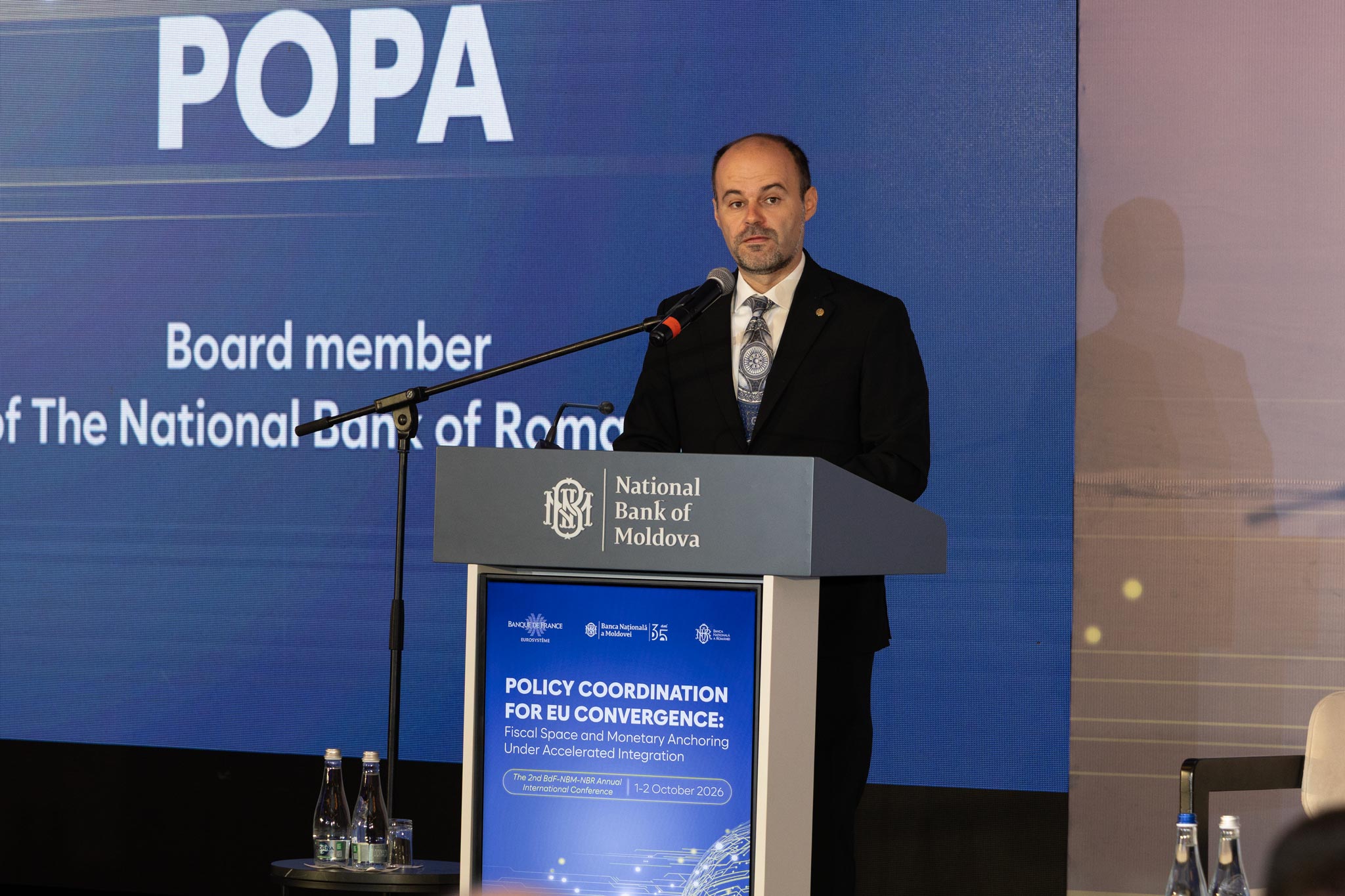
Mr Cristian Popa, member of the Board of the National Bank of Romania, discussed the role of institutions and cooperation between central banks in the Republic of Moldova’s European integration process. He highlighted the partnership between the NBR and the NBM, built over decades on trust, a shared history and professional values.
“European integration is not simply about adopting legislation or meeting formal criteria. It also involves strengthening institutions and developing the analytical capabilities needed to address increasingly complex economic challenges,” Mr Cristian Popa noted.
At the opening of the conference, Ms Agnès Bénassy-Quéré, Deputy Governor of the Banque de France, conveyed the message that in the current international context, fostering convergence between Western and Eastern boundaries of Europe is key. “The second international conference hosted by the National Bank of Moldova has been an important contribution to this journey. It has provided a unique platform for policymakers, central bankers and leading economists to exchange views on the challenges and opportunities of EU convergence, at a time when economic coordination and institutional resilience are more important than ever,” the Banque de France representative’s message stated.
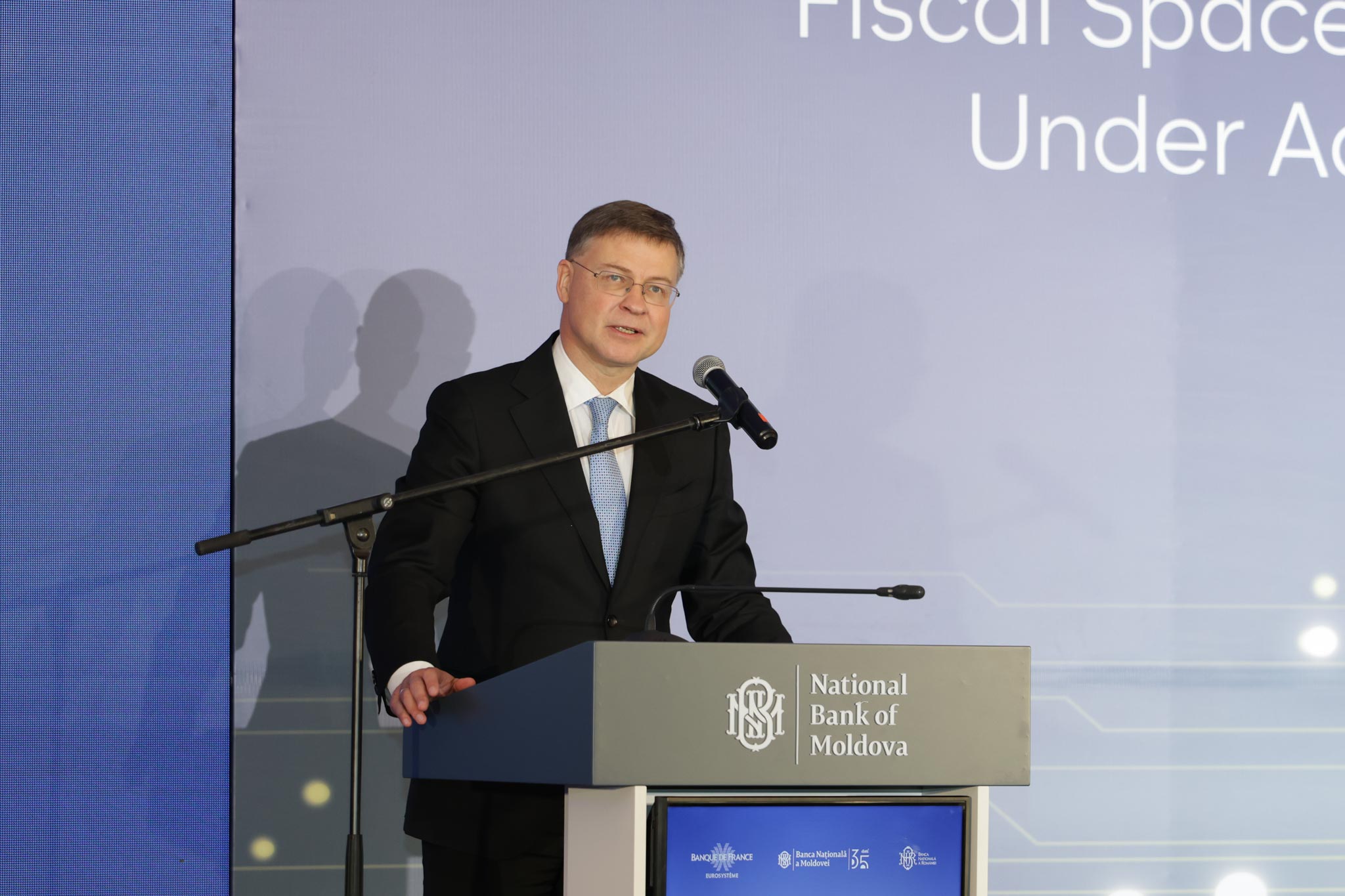
“The European Union supports the Republic of Moldova’s economic transformation, and citizens and businesses are already experiencing the benefits of integration,” stated Mr Valdis Dombrovskis, European Commissioner for Economy and Productivity, who attended the event in Chișinău as the keynote speaker.
The Commissioner illustrated the results of integration by referring to the Republic of Moldova’s connection to SEPA, which enables faster, cheaper and simpler transfers, as well as access to roaming services without additional charges between the Republic of Moldova and the EU. He also mentioned initiatives to develop capital markets and attract investment, emphasising that integration takes shape gradually, before accession itself.
With regard to macroeconomic stability, the European Commissioner highlighted, among other factors, the well-calibrated monetary policy response to inflationary pressures.
“A credible commitment to price stability supports confidence and a stable investment environment. Central bank independence is fundamental to the credibility of this commitment and is an important element of the Republic of Moldova’s alignment with European Union standards,’ Mr Valdis Dombrovskis emphasised.
The Commissioner also highlighted the financial and technical support provided through the European Union’s EUR 1.9 billion Growth Plan for the Republic of Moldova. He noted that more than EUR 500 million had already been made available to the country.
“The Republic of Moldova can count on our support on its path towards European Union membership. We will be there every step of the way,” Mr Valdis Dombrovskis concluded.
Alongside financial and technical support for reforms, European integration can benefit the Republic of Moldova’s economy by expanding businesses’ access to financing and attracting investment. These opportunities were examined in a presentation by Nicolas Véron, a researcher at Bruegel, focusing on the single market for financial services and the Savings and Investments Union initiative.
Building on the discussions on European financial integration, Ms Soledad Zignago, Principal Economist at the Banque de France, explored the evolution of the Banking Union, from strengthening resilience to addressing competitiveness challenges. The Banque de France’s message highlighted that regulatory reforms adopted after the global financial crisis had strengthened banks’ capital positions and their ability to withstand severe shocks.
Making the most of financing and investment opportunities also depends on macroeconomic stability. This dimension of European integration was addressed in the first panel discussion, which focused on monetary policy frameworks during the pre-accession phase. The panel examined the choice of monetary and exchange rate regimes suited to EU candidate economies, considering inflation targeting, exchange rate stability to support trade integration, and long-term convergence with the euro area.
The discussion, moderated by Mr Mihnea Constantinescu, Deputy Governor of the National Bank of Moldova, brought together Mr Andriy Pyshnyy, Governor of the National Bank of Ukraine; Mr Gediminas Šimkus, Governor of the Bank of Lithuania and a member of the Governing Council of the European Central Bank, Mr Nikolay Nenovsky, a member of the Governing Council of the Bulgarian National Bank; and Mr Cristian Popa, Special Advisor to the Governor of the National Bank of Romania.
The panel compared two paths towards convergence. Lithuania and Bulgaria pursued convergence under currency board arrangements, while Romania followed a flexible exchange rate regime with inflation targeting. Both frameworks supported convergence towards EU income levels.
“The real appreciation that accompanies convergence manifests itself, under a fixed exchange rate, through higher inflation than in the anchor currency area and, under a flexible exchange rate, also through a strengthening of the domestic currency. The sustainability of the process is reflected in balance sheets: in how the external deficit is financed, the pace of credit growth, and the alignment of wages with productivity. Ukraine’s experience confirms that a monetary framework built on a sound banking system, adequate reserves and a credible inflation target can withstand even exceptionally large shocks. For the Republic of Moldova, the common lesson from these four experiences is that institutions established well in advance and well-coordinated policies strengthen any monetary regime,” Mr Mihnea Constantinescu noted.
Discussions on the conditions supporting long-term convergence continued with an examination of the role of investment, productivity growth and financial sector development. These topics were explored in greater depth during the second panel, which focused on integration into the European single market and structural convergence. The panel was moderated by Wolf Reuter, Chief Economist and Director of the Economics and Research Department at the Oesterreichische Nationalbank.
The panel brought together Mr Trajko Slaveski, Governor of the National Bank of the North Macedonia; Mr Claudiu Năsui, Minister of Economic Development and Digitalisation of the Republic of Moldova; Mr Sorin Mititelu, Vice-President of Romania’s Financial Supervisory Authority; and Mr Petru Rotaru, First Deputy Governor of the National Bank of Moldova.
In his remarks, Mr Petru Rotaru highlighted the benefits of financial integration that citizens and businesses are already experiencing.
“Alongside the development of the MIA Instant Payments system, payment modernisation facilitates economic activity and creates the conditions for expanding financial services. For the Republic of Moldova, participation in SEPA already illustrates the benefits of closer integration: more affordable euro transfers for citizens and businesses, and more direct financial links with European partners,” the NBM First Deputy Governor stated.
Progress in financial integration is therefore evident in the Republic of Moldova’s participation in SEPA. On 6 October, the country will mark one year since SEPA transfers became operational. In the first 11 months, citizens and businesses made approximately 1.1 million transfers, at an average cost of around EUR 1 per transaction. Lower costs also generated savings of approximately EUR 15 million.
The Growth Plan for the Republic of Moldova, the conditions attached to European financing, and the capability of fiscal policy to respond to shocks were the focus of the third panel, moderated by Professor Marius Alin Andrieș of Alexandru Ioan Cuza University in Iași.
The panel featured Ms Annika Eriksgaard, Deputy Director-General for Investment and International at the European Commission’s Directorate-General for Economic and Financial Affairs (DG ECFIN); Ms Svetlana Cerović, the International Monetary Fund’s Resident Representative in Moldova; Mr Volodymyr Lepushynskyi, Deputy Governor of the National Bank of Ukraine; and Mr Hayk Avetisyan, Head of the Macroeconomic Directorate at the Central Bank of Armenia.
The speakers examined the risk that an economic slowdown could delay the implementation of reforms and, consequently, access to financing linked to results, precisely when the budget needs support. The discussion considered the role of financing in providing the time needed to implement reforms, as well as the risk that postponing them could require more difficult fiscal adjustments later.
Another topic was preparing the budget in anticipation of a crisis by strengthening fiscal institutions, creating safety margins, and engaging in medium-term planning. The discussion also addressed calibrating the pace of budget deficit reduction so that the measures adopted would bolster confidence in economic policies and limit negative effects on economic activity.
The speakers also discussed using multiple economic scenarios to inform decision-making under uncertainty, and adapting measures while maintaining commitments to structural reforms.
Following the first day’s discussions on economic policy challenges and European convergence, the programme on 2 October placed academic research at centre stage.
The research session was opened by Denis Gorea, Senior Economist in the Monetary and Economic Department of the Bank for International Settlements. His presentation focused on fiscal risks, particularly their implications for monetary policy and their effects on the financial sector and the real economy. He emphasised the importance of preserving central bank independence and credibility, and responding promptly to inflationary risks.
The first session also featured a paper by Andreea Liliana Vladu of the European Central Bank on the relationship between excess liquidity and the yield curve. This complemented the monetary policy discussions by examining financial market conditions.
The second session continued the analysis of policy coordination and monetary integration. A paper by Hugo Minnella of Le Mans University and CEPREMAP examined the combination of economic policies, welfare and policy rules in a monetary union with heterogeneous economic agents. Research by Mr Xavier Goenaga of Paris-Panthéon-Assas University and BRED explored the transition to monetary union and the redistribution of sovereign risk, drawing on empirical evidence on euro adoption.
All presentations are available to view here: https://www.bnm.md/en/content/research-events
The Annual International Research Conference, entitled “Policy Coordination for EU Convergence: Fiscal Space and Monetary Anchoring under Accelerated Integration”, brought together more than 120 participants in Chișinău. The inaugural edition, held in 2025, also in Chișinău, was entitled ‘New Technology for Old Markets’ and focused on the future of finance in emerging markets..


