Welcome to the official website of the National Bank of Moldova!
×
Do you have good eyesight and want to turn this tool off?



Welcome to the official website of the National Bank of Moldova!
You can choose one of the most popular reports from the list:

National Bank and the members of its decision-making bodies shall be independent in exercising the tasks conferred upon them by law, and shall neither seek nor take instructions from public authorities or from any other authority.

In order to ensure and maintain price stability over the medium term, the National Bank’s aim will be to keep inflation (measured by Consumer Price Index) at the level of 5.0 percent annually with a possible deviation of ± 1.5 percentage points, considered to be optimal for growth and development of Moldova's economy over the medium-term.

Financial stability is achieved by strengthening the resilience of the financial system, limiting the contagion effect and reducing the accumulation of systemic risks, thus contributing to the sustainability of the financial sector and economic growth.

National Bank shall have the exclusive right to issue on the territory of the Republic of Moldova banknotes and coins as legal tender, as well as commemorative and jubilee banknotes and coins as legal tender and for numismatic purposes.

National Bank is exclusively responsible for the licencing, supervision and regulation of financial institutions activity.

National Bank of Moldova acts as banker and fiscal agent of the State and shall receive from state bodies economic and financial information and documents, which are necessary for carrying out its tasks.

National Bank of Moldova is an autonomous public legal entity and is responsible to the Parliament.

National Bank shall inform the public on the monetary policy strategy on the results of the macroeconomic analysis, the evolution of the financial market and on statistics, including with regard to monetary supply, crediting, balance of payments and the state of the foreign exchange market.

National Bank of Moldova is responsable for the compilation of the balance of payments, international investment position and the statistics of the external debt of the Republic of Moldova.
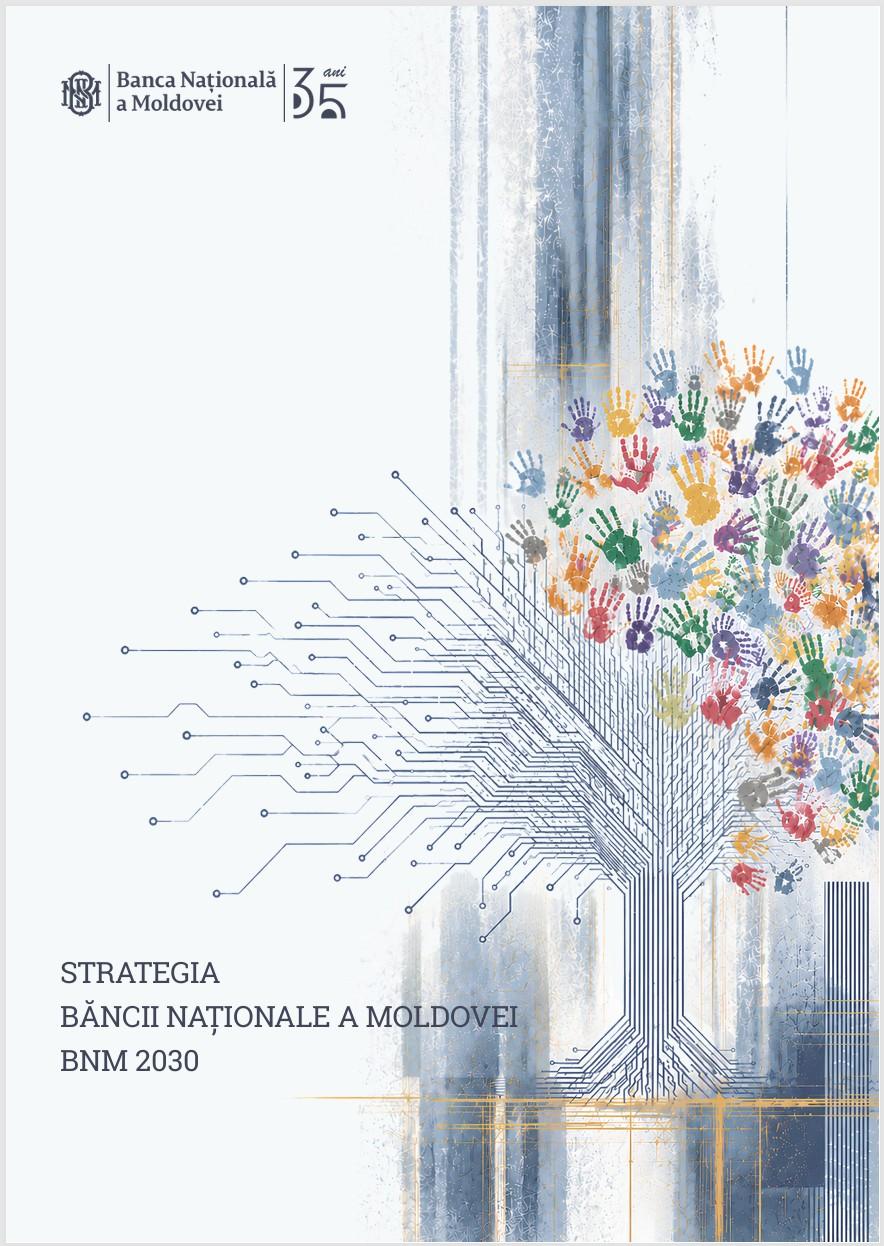

This year holds particular significance: we celebrate the 35th anniversary of the establishment of the National Bank of Moldova. It is, on the one hand, a moment to reflect on the path we have taken and, on the other hand, to reaffirm the sense of responsibility that guides our work.
Over the years, the National Bank of Moldova has undergone significant transformations, with every challenge ultimately becoming a source of learning and strengthening. In a changing world, the ability to adapt becomes a form of institutional responsibility.
Today, the financial system stands at the crossroads of modernisation and innovation processes shaped by technological transformation, transition towards a sustainable economy, the redefinition of risks, and the ways in which they are managed. In this context, a proactive approach is becoming a priority, enabling us to anticipate developments, deepen our understanding of emerging challenges, and develop clear and effective measures.
The National Bank of Moldova has demonstrated resilience and consistency in fulfilling its mandate, adapting to the challenges of an ever-changing environment. We have maintained financial stability, strengthened confidence in the financial system, and continued to modernise it.
Aligning with the best European and international practices has become a defining choice for us. It reflects how we position ourselves within a framework of rigour, transparency and accountability. This direction requires us to continue with the same discipline and ambition.
In a constantly changing environment, progress is built on clarity. Thus, the launch of the new Strategic Plan “NBM 2030” is more than just a strategic planning tool – it reflects our institutional identity and commitment to the strategic directions adopted.
The new strategy combines continuity with transformation. The fundamental pillars remain the same – monetary policy, financial markets, financial stability, supervision, payment systems and national currency. However, the approach to strengthening and advancing these areas is evolving, with an increased focus on innovation, digitalisation and the integration of European standards.
At the same time, the transversal objectives of the strategy serve as a genuine unifying force across the institution – the point at which the efforts of each team come together and gain coherence.
The strategy is built around five key directions:
These objectives establish a common framework for action, in which everyone’s contribution supports the development of a shared direction. In this context, the integration of emerging technologies is becoming a catalyst for progress. Yet beyond technology, the ability to think critically, make responsible decisions and maintain a balance between innovation and prudence remains fundamental.
The strategy marks a phase of institutional recalibration, aimed at enhancing agility, strengthening our capacity for anticipation, and leveraging the opportunities offered by new technologies. A key role in this process is played by our team, which, through professionalism, responsibility and a spirit of collaboration, will translate strategic objectives into tangible results.
Anca-Dana Dragu
Governorr
The fundamental elements of the National Bank’s Strategic Plan reflect the institution’s primary objective and development direction, and establish its institutional values, providing a common framework for guiding the institution’s activities, a clear vision of its future, and motivation for its employees in carrying out their duties. They also outline how the National Bank will conduct its activities in the coming years to maintain and strengthen public confidence.
The fundamental objective of the National Bank is to ensure and maintain price stability. Without prejudice to its fundamental objective, the National Bank, within the limits of its competences, contributes to the stability of the financial system and supports the general economic politics of the state.


The National Bank of Moldova is an independent, high-performing, and transparent institution, resilient to external challenges, proactive in its actions, and credible in its decisions. It is guided by good governance practices, aligned with European Union standards, with a strong team of professionals committed to fulfilling its mandate for the benefit of all citizens.
NBM's values represent the fundamental principles that guide the institution’s activities and ensure that its decisions are aligned with them. These values are shared and assumed by each employee. The values provide a common frame of reference for organizational behaviour, favouring coherence and consistency in the implementation of the strategy.


Team spirit
unity and consistency in values and actions, commitment, care, support, and mutual respect.

Professionalism
competency, efficiency, ethics, integrity, accountability, and continuous improvement.

Independence
autonomy in exercising the duties established by law, impartiality, and objectivity, without interference from other authorities or individuals.

Responsibility
an ongoing commitment to considering the economic, social, and environmental impact of the work performed and the decisions made.

Flexibility
openness to change, innovative capacity, and agility.

Credibility
policies, reforms, communication, and conduct that inspire trust and confidence among the public and the markets through the application of transparency principles.

Resilience
human resources, internal procedures, and information technologies that are resilient to external shocks and ensure the safe and diligent operation of the institution.
The NBM's core areas of activity, established for the next five years, reflect the NBM's mission and serve as its core pillars. The strategic objectives are derived from these core areas of activity (the first 5 areas). In addition, the institution’s internal support functions and governance will be strengthened:
The National Bank establishes and promotes the monetary and foreign exchange policy in the state to achieve its fundamental objective of ensuring and maintaining price stability. The National Bank aims to anchor inflationary expectations and create favourable conditions for the sustainable development of the economy.
The NBM contributes to maintaining the stability of the financial system by identifying, assessing and monitoring macro-financial vulnerabilities and systemic risks, as well as by developing related analytical tools.
The NBM regulates and supervises the banking and non-banking financial sectors, aiming at the prudent, transparent and stable functioning of supervised entities. By aligning the regulatory framework and supervisory practices with the standards and best practices of the European Union, the NBM contributes to strengthening integrity, resilience and trust in the financial sector.
The National Bank regulates, monitors and promotes the safe, efficient and continuous functioning of financial market infrastructures, in accordance with international standards and good practices. By modernizing the payment infrastructure and stimulating the implementation of innovations in digital payments, the National Bank facilitates the efficient circulation of financial flows and contributes to maintaining financial stability and promoting public confidence in making cashless payments.
The National Bank holds the exclusive right to issue the national currency followed by the putting into circulation, withdrawal, processing and verification of the authenticity and quality of the cash, as well as the management of numismatic issues. By maintaining safe, available and appropriate quality cash, the National Bank protects the credibility of the national currency and the public's trust in it.
The areas of support and governance provide the institutional, human, organizational and technological framework necessary for the efficient and independent exercise of the basic tasks of the National Bank. Capacity building in this area will contribute to strengthening institutional resilience, agility, transparency and accountability, including in the context of digitalisation and European integration.
„NBM 2030”

Strategic Objective 1 aims to further develop the monetary policy framework to maintain price stability and enhance responsiveness to domestic and external economic developments. At the same time, the achievement of the objective entails the effective management of foreign exchange reserves and associated risks, the liberalization of capital foreign exchange transactions, and the development of the interbank market. Strategic Objective 2 aims to strengthen the financial stability framework through the continuous development and calibration of macroprudential instruments and the improvement of analytical capacities in line with the EU acquis. It also aims to prevent and mitigate systemic risks and strengthen recovery, resolution and crisis management mechanisms in the banking and non-banking financial sectors. Strategic Objective 3 aims to strengthen the regulatory framework and risk-based supervision of the banking and non-banking financial sectors by aligning them with the EU acquis and international best practices. It also aims to develop the regulatory and supervisory framework for sustainable and environmentally responsible finance, digitalise processes, and enhance the operational resilience of the financial sector. Strategic Objective 4 aims to develop a modern, efficient, secure and interoperable financial market infrastructure by aligning the regulatory and oversight framework with the EU acquis and international developments. It also aims to expand the use of digital payments, strengthen cybersecurity and data protection, and promote the adoption of innovations in digital payments. Strategic Objective 5 aims to ensure the quality, integrity and security of cash in circulation, as well as to modernise the infrastructure of its supply, storage, processing and management. It also aims to strengthen the anti-counterfeiting framework in line with the EU acquis, including through the establishment of National Banknote and Coin Analysis Centres and a Counterfeits Monitoring Centre. Strategic Objective 6 aims to strengthen the National Bank's capacity to anticipate and absorb shocks, as well as to adapt rapidly to change, by strengthening internal governance, cybersecurity, and risk culture. In this regard, the modernization of technological infrastructure, digitization and automation of processes, together with the development of a centralized data infrastructure, will contribute to improving operational efficiency and supporting the decision-making process. At the same time, analytical, forecasting and statistical production capabilities will be developed in line with the EU acquis. Strengthening institutional communication will contribute to maintaining public trust and ensuring effective communication management in crisis situations. Strategic Objective 7 aims to develop and leverage human capital by strengthening the integrated human resources management system, promoting continuous learning, and fostering a performance-oriented organizational culture. It also aims to develop professional, managerial, and emerging skills, as well as encourage knowledge transfer, in order to enhance employees' capacity to respond to future challenges and strengthen institutional resilience and agility. Transversal Objective 1 aims to systematically align the institutional and regulatory framework of the National Bank with the EU acquis and standards through the harmonization of legislation, its effective implementation, and the continuous monitoring of progress. At the same time, the National Bank will strengthen its role in the Republic of Moldova’s EU accession process by participating in the accession preparation exercise and fulfilling the commitments in its areas of competence. Cooperation with European institutions and international partners will support the modernization of the institution, capacity development, and effective integration into the architecture of the European System of Central Banks. Transversal Objective 2 aims to transform the National Bank into a knowledge-, data- and innovation-based institution through the continuous development of analytical and research capabilities and the digitalisation of processes. Leveraging emerging technologies, including artificial intelligence, will support the automation of activities, the modernisation of financial services, and the enhancement of operational efficiency. At the same time, expanding the use of data science and predictive models will strengthen the basis for decision-making, risk assessment, and enhance the institution's capacity to respond to emerging challenges. Transversal Objective 3 aims to enhance the population’s level of financial education and inclusion by facilitating equitable access to affordable, safe and high-quality financial services. In its capacity as the national coordinating authority, the National Bank will support the development and implementation of the National Financial Inclusion Strategy, strengthening interinstitutional cooperation and fostering an inclusive and efficient financial ecosystem. Furthermore, the expansion of financial education programmes will contribute to building an informed and responsible society, reducing inequalities, and strengthening the stability of the financial system. Transversal Objective 4 aims to integrate environmental, social and governance (ESG) principles into the processes and activities of the National Bank through the development and implementation of an ESG policy. It aims to strengthen institutional capacity to manage climate-related risks, incorporate sustainability objectives into financial asset management, and reduce the carbon footprint. The implementation of ESG initiatives will support the efficient use of resources, alignment with European and international standards, and the strengthening of public trust in the institution. Transversal Objective 5 aims to foster an inclusive and meritocratic organizational culture by continuously embedding the principles of diversity, equity and inclusion across all areas of the National Bank’s activities and in the decision-making processes. Recognizing and valuing each employee’s individual characteristics and contributions within an environment founded on respect, cooperation and equal opportunities will support both individual and institutional performance.
1. Strengthening the monetary policy framework and optimising the implementation of monetary policy

2. Consolidating the financial stability and macroprudential policy framework

3. Strengthening the regulation and supervision of the banking and non-banking financial sectors

4. Continuous development of financial market infrastructures and contributing to the growth of digital payments

5. Enhancing the protection and management of cash in circulation

6. Strengthening institutional resilience and agility

7. Continuous development of future-oriented human capital

1. Alignment of the institutional and regulatory framework with EU standards

2. Analysis, research, innovation and digitalization

3. Financial education and inclusion

4. Governance, social and environmental responsibility

5. Diversity, equity and organisational inclusion

Strategic Plan of the National Bank of Moldova „NBM 2025”
The National Bank of Moldova’s Strategic Plan for 2018–2020
The National Bank of Moldova’s Strategic Plan for 2013–2017


